
 English
  日本語
日本語  Français
  Español
  عربى
عربى  italiano

Industry News
 May 06, 2026
 Posted by Administrator
Flexible Food Packaging Guide
Content
- 1 What Flexible Food Packaging Actually Does That Rigid Containers Cannot
- 2 Core Laminate Structures and Their Barrier Performance
- 3 Pouch Formats and Structural Design Options
- 4 Functional Features That Drive Consumer Preference and Repeat Purchase
- 5 Bag Supplement Designs: Printing, Branding, and Retail Impact
- 6 Sustainability Considerations in Modern Flexible Food Packaging
What Flexible Food Packaging Actually Does That Rigid Containers Cannot
Flexible food packaging has displaced rigid containers across a wide range of food categories not because it is cheaper — though unit material costs are typically 30–50% lower — but because it delivers a combination of barrier performance, format versatility, and supply chain efficiency that no rigid format can match simultaneously. A glass jar protects contents but adds dead weight. A metal can offers excellent barrier properties but cannot be reshaped for a retail shelf endcap display or reduced in volume as contents are consumed. Multi-layer flexible pouches do all of these things at once, and do them in a format that runs on high-speed automated filling and sealing lines without the fragility or specialized handling that rigid containers demand.
The functional core of modern flexible food packaging is the laminated film structure. By bonding two to five dissimilar film layers — each contributing a specific property — converters engineer a composite that no single material could provide. A typical PET/AL/PE construction illustrates the principle: the outer PET layer provides puncture resistance and a dimensionally stable print surface; the aluminum foil middle layer delivers near-absolute oxygen and moisture barrier; the inner PE layer provides food-contact safety and heat-seal capability. The result is a pouch that can preserve coffee beans or nuts for 12–18 months at ambient temperature, withstand the mechanical stress of transit, and seal reliably at filling speeds exceeding 60 pouches per minute.
Core Laminate Structures and Their Barrier Performance
Selecting the right laminate for a food flexible pouch packaging application begins with understanding what the product actually needs to be protected from — oxygen, moisture, light, or a combination — and for how long. The most commonly specified structures and their primary use cases are:
| Laminate Structure | OTR (cc/m²/day) | WVTR (g/m²/day) | Typical Applications |
|---|---|---|---|
| PET / AL / PE | < 0.01 | < 0.01 | Coffee, pet food, instant soups, seasonings |
| BOPP / CPP | 100–300 | 2–5 | Snacks, dried noodles, short-shelf confectionery |
| PET / VMPET / PE | 0.5–2 | 0.1–0.5 | Tea, nuts, dried fruits — where some light transmission is acceptable |
| PET / SiOx / PE | 0.1–1 | 0.05–0.3 | Transparent high-barrier pouches, microwaveable formats |
For oxygen-sensitive products such as roasted coffee or high-fat nuts, aluminum foil laminates remain the only proven solution for shelf lives beyond six months at ambient storage. Metallized PET (VMPET) offers a cost reduction of roughly 20–30% over foil laminates, but its oxygen transmission rate is orders of magnitude higher — sufficient for many dry goods, but inadequate for products with aggressive oxidation sensitivity. Silicon oxide (SiOx) coated films offer a transparent alternative to foil with significantly better barrier than metallized films, and are increasingly specified for premium flexible food packaging formats where product visibility is a retail priority.
Pouch Formats and Structural Design Options
The format of a food flexible pouch packaging unit — how it is sealed, shaped, and supported — determines its functionality on the filling line, its appearance on shelf, and its usability for the end consumer. Each format involves structural trade-offs that should be evaluated against the specific product, fill weight, and retail channel requirements.
Three-Side-Seal and Back-Seal Pouches
Three-side-seal flat pouches are the simplest and most material-efficient format. They are produced from a single web or two flat sheets sealed on three edges, with the fourth edge left open for filling before final sealing. Back-seal (pillow) pouches are formed from a single flat film roll on vertical form-fill-seal (VFFS) machines — the dominant high-speed format for granular and powdered food products including seasonings, instant soups, and ground coffee. Both formats are inherently compact, run at the highest machine speeds (up to 120 cycles per minute on VFFS), and offer the lowest per-unit pouch cost of any flexible format. Their limitation is that neither stands upright on shelf without external support, which constrains retail display options for products sold individually.
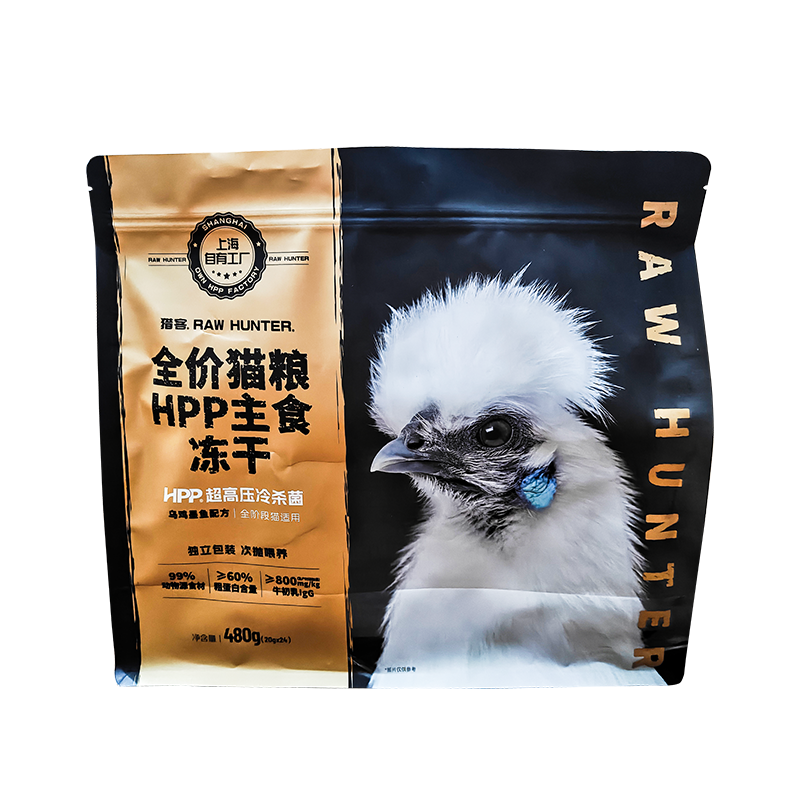
Stand-Up Pouches
The stand-up pouch — or Doypack — solves the display problem by incorporating a gusseted bottom panel that expands when the pouch is filled, creating a stable base. Stand-up pouches provide a large front panel for brand graphics, stand independently on shelf, and are the preferred format for retail-facing products across categories including coffee beans, nuts, dried fruits, and pet food. Their production involves more complex tooling and typically runs at 40–60% of the machine speed achievable with flat pouches, which increases per-unit cost. For high-value, high-visibility retail SKUs, this trade-off is consistently justified by the shelf-impact advantage.
Custom-Shaped and Spouted Formats
Custom-shaped flexible food packaging — die-cut contour pouches, spouted pouches, and shaped stand-ups — extends the format into branded differentiation territory. Spouted pouches with resealable caps are standard for liquid and semi-liquid foods including sauces, baby food, and drinkable nutrition supplements. Die-cut shapes command a significant tooling premium but can be amortized across large production volumes for established brands seeking retail shelf differentiation within a crowded category.
Functional Features That Drive Consumer Preference and Repeat Purchase
The functional add-on features integrated into a food flexible pouch packaging unit have a measurable impact on consumer satisfaction and purchase repeat rates. Specifying these features correctly — for the product, the consumer use occasion, and the retail price point — is as important as the laminate selection. The most impactful features include:
- Resealable zippers: Press-to-close zipper tracks allow consumers to reseal the pouch after opening, extending in-use freshness for multi-serve products such as coffee, nuts, and dried fruits. Zipper integration adds roughly 10–15% to pouch material cost but consistently scores as the top packaging feature in consumer surveys for pantry food categories.
- Degassing valves: One-way CO₂ release valves are essential for roasted coffee packaging. Freshly roasted coffee emits significant carbon dioxide for 24–72 hours post-roast — without a degassing valve, gas buildup would either rupture the pouch or require a delay between roasting and packaging that compromises aroma. Valves allow immediate packaging of freshly roasted product while venting CO₂ outward and preventing oxygen ingress.
- Tear notches: Laser-scored or mechanically notched tear initiation points enable consistent, controlled opening without scissors — a significant convenience driver for consumers and a packaging quality signal for brand owners. Notch placement should be specified relative to the pouch's structural seals to ensure the tear path does not compromise barrier integrity.
- Clear windows: Transparent panels or full-face clear constructions allow product visibility, which research consistently links to higher conversion rates at retail for visually appealing products such as whole coffee beans, mixed nuts, and colorful dried fruits. Windows in foil-laminate pouches are created by omitting the foil layer in the window zone and substituting a transparent high-barrier film — a technically demanding specification that requires close converter-brand collaboration.
Bag Supplement Designs: Printing, Branding, and Retail Impact
Effective bag supplement designs — the visual design system applied to the pouch surface — are as commercially important as the structural and barrier specification. In categories where multiple brands compete on crowded retail shelves, the pouch's graphic execution is often the primary purchase driver at the point of sale. Flexible food packaging supports several print technologies, each with different quality levels, minimum order quantities, and cost profiles.
Rotogravure printing remains the industry standard for high-volume flexible packaging runs exceeding 50,000 units. Engraved cylinders deliver exceptional color consistency, fine detail reproduction, and resistance to print defects across long production runs — critical qualities for established brands with strict color standards. Cylinder engraving costs are substantial (typically $500–$1,500 per color per SKU), making gravure economical only at volumes where setup cost is amortized to an acceptable per-unit contribution.
Flexographic printing offers a cost-effective alternative for mid-volume runs (10,000–50,000 units), with lower plate costs and faster changeover times than gravure. Modern HD flexo printing has narrowed the quality gap with gravure significantly, and many brand owners at mid-market price points now specify flexo as their primary print process. For shorter runs, digital printing — directly onto pre-formed pouches or onto film prior to lamination — eliminates plate costs entirely, enabling small-batch bag supplement designs, seasonal variants, and personalized packaging at quantities as low as 500 units.
Regardless of print process, the design brief for flexible food packaging must account for the physical behavior of the substrate. Unlike paper or rigid packaging, flexible films stretch, fold, and conform during filling and handling — design elements placed too close to seal zones distort or disappear. Matte varnish finishes, soft-touch coatings, and spot UV treatments add tactile differentiation but require compatibility testing with the laminate structure to ensure adhesion durability under refrigerated or high-humidity storage conditions.
Sustainability Considerations in Modern Flexible Food Packaging
The environmental profile of flexible food packaging is more nuanced than its critics typically acknowledge. While multi-layer laminates are currently difficult to recycle through standard municipal streams, their life-cycle footprint compares favorably to rigid alternatives on several key metrics. Flexible pouches weigh 70–90% less than the equivalent glass or metal container, reducing transport fuel consumption and associated emissions at every point in the supply chain. Their space efficiency in transit — a single truck of flat pouches can replace several trucks of pre-formed rigid containers — compounds this advantage.
The industry is actively developing recyclable mono-material structures designed to replace conventional mixed-plastic laminates. All-PE and all-PP constructions that can achieve moderate barrier performance while qualifying for existing polyolefin recycling streams are commercially available today, and ongoing development is progressively extending their barrier capability. For applications where foil-level barrier is essential, chemical recycling pathways — which break mixed laminates down to their monomer components — are entering commercial scale in Europe and are increasingly available as a credentialed end-of-life route for flexible food packaging converters and brand owners who require third-party verified recyclability claims.
Product Categories
Mainly engaged in various types of packaging boxes made of different materials and various paper products.


-
Email
[email protected]Phone Number
+86-15300896380 -
Address
No. 58 Hongmudan Road, Songjiang District, Shanghai, China -
Quick Links
Home About Us Service Industries News Contact -
Products
Food Packaging Cosmetic Packaging Gift Wrapping Apparel Packaging Home Textile Packaging Other Packaging Paper Packaging Boxes -
feel free to contact us

