
 English
  日本語
日本語  Français
  Español
  عربى
عربى  italiano

Industry News
 Mar 02, 2026
 Posted by Administrator
Which Gift Wrapping Offer Best for E-Commerce Shipping?
Content
- 1 Why Gift Wrapping in E-Commerce Is More Complex Than It Looks
- 2 Tissue Paper and Inner Wrap: The Foundation Layer
- 3 Gift Boxes vs. Standard Shipping Cartons for Wrapped Orders
- 4 Ribbon, Bows, and Decorative Elements: What Survives Shipping
- 5 Comparing Gift Wrapping Options by Key E-Commerce Criteria
- 6 Sustainable Gift Wrapping Materials That Hold Up in Transit
- 7 Operational Tips for Scaling Gift Wrapping in High-Volume Fulfillment
Why Gift Wrapping in E-Commerce Is More Complex Than It Looks
In a physical retail setting, gift wrapping is a finishing touch applied moments before handoff. In e-commerce, it is an engineering challenge. The wrapped package must survive a fulfillment center, multiple carrier handoffs, last-mile delivery, and potentially days in a mailbox or on a doorstep—all before the recipient ever sees it. A beautifully wrapped gift that arrives crushed, torn, or with ribbons tangled around the product is worse than no gift wrapping at all. For online retailers offering gift wrapping as a value-added service, the selection of materials, methods, and packaging architecture is a strategic decision that directly affects customer satisfaction, return rates, and brand perception.
The challenge is compounded by the economics of e-commerce fulfillment. Gift wrapping adds labor time, material cost, and dimensional weight to every order it touches. Wrapping styles that work beautifully in a boutique setting—multiple layers of tissue, elaborate bows, hand-tied ribbons—may be impractical at scale or incompatible with automated packing lines. Retailers must find gift wrapping solutions that strike the right balance between visual impact, structural integrity during shipping, operational efficiency, and cost per order.
Tissue Paper and Inner Wrap: The Foundation Layer
Tissue paper is the most widely used inner wrapping material in e-commerce gift packaging, and for good reason. It is lightweight, adds minimal dimensional weight, folds cleanly around irregular product shapes, and delivers an immediate unboxing impression when the outer shipping box is opened. For gift wrapping programs, tissue paper serves a dual purpose: it protects the product surface from scratching during transit and provides the visual reveal moment that makes the unboxing feel like a genuine gift experience rather than a standard order delivery.
The key specification decision for tissue paper in gift wrapping is weight and opacity. Standard 17–20 gsm tissue is sufficient for most light products—apparel, accessories, cosmetics, and small home goods. Heavier items or products with sharp edges may require reinforced tissue or a combination of tissue and foam wrap underneath. For brand consistency, custom-printed tissue paper with logos, patterns, or seasonal designs adds significant perceived value at a relatively low incremental cost, particularly when ordered in volume.
One limitation of tissue paper as a standalone gift wrapping layer is that it offers no structural protection. It must always be used inside a rigid outer container—a gift box, mailer box, or shipping carton—that bears the compressive and impact loads of transit. Tissue paper alone will not protect a product from crushing, and retailers who ship tissue-wrapped items in soft poly mailers should expect damage rates to increase, particularly for fragile products.
Gift Boxes vs. Standard Shipping Cartons for Wrapped Orders
The outer container choice is arguably the most consequential decision in e-commerce gift wrapping. Two primary approaches dominate: dedicated gift boxes that serve as both the presentation layer and the shipping container, and standard corrugated shipping cartons that enclose a separately wrapped gift box inside. Each approach has distinct tradeoffs across cost, presentation quality, and shipping performance.
Rigid Gift Boxes as Outer Shipping Containers
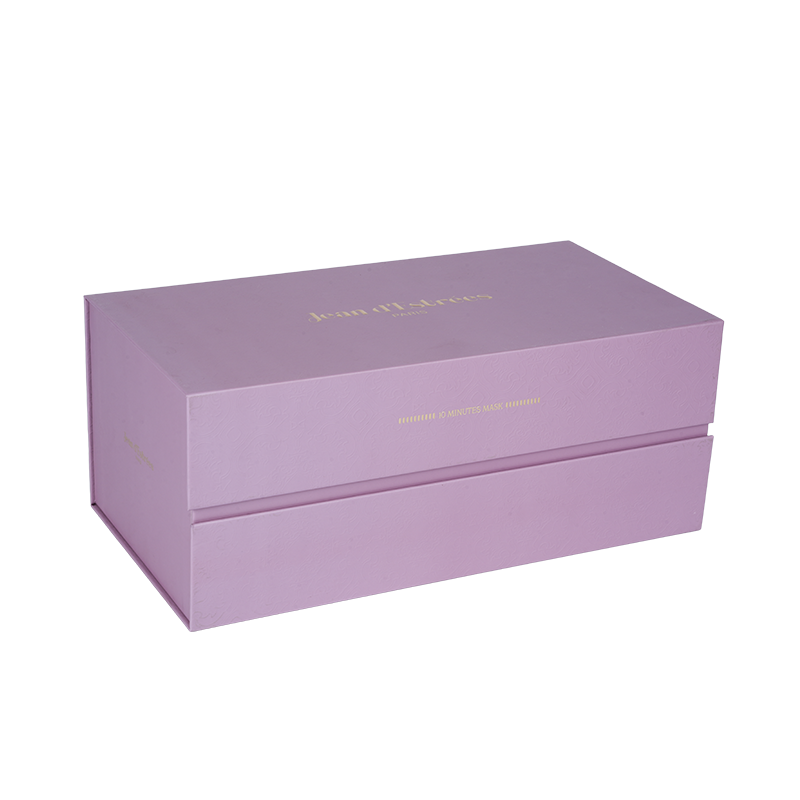
Rigid gift boxes—typically constructed from 2mm or 3mm greyboard with a printed or wrapped exterior—create a premium unboxing experience and eliminate the need for a separate shipping carton when fitted with an appropriate outer protective layer such as a kraft sleeve or shrink wrap. However, rigid boxes have lower crush resistance than corrugated cartons and are significantly more expensive per unit. They are best suited for high-average-order-value products where the packaging cost is a small percentage of the item value and the premium presentation justifies the spend.
Corrugated Mailer Boxes with Interior Gift Wrapping
For most e-commerce operations, a corrugated mailer box or RSC carton containing tissue-wrapped product, a gift message card, and decorative fill material strikes the best balance of protection, cost, and presentation. The corrugated outer layer absorbs impact and compression during transit while the interior gift wrapping delivers the reveal experience. Custom printing on the interior of the mailer box lid—a brand message, a holiday pattern, or a simple thank-you note—can elevate the unboxing experience without requiring an additional rigid gift box layer.
Ribbon, Bows, and Decorative Elements: What Survives Shipping
Traditional gift wrapping elements like curling ribbon, pre-made bows, and raffia ties are problematic in e-commerce shipping. Attached externally to a package, they are almost universally destroyed during transit—caught in conveyor belts, crushed under other parcels, or torn off by automated sorting equipment. Even when enclosed inside a shipping carton, loose ribbon and bow elements tend to arrive tangled, flattened, or displaced from their intended position. Retailers who include these elements must set customer expectations accordingly or accept a meaningful percentage of disappointed recipients.
More shipping-resilient decorative approaches for e-commerce gift wrapping include:
- Printed ribbon designs applied directly to tissue paper or gift box wrap, replicating the visual of a tied ribbon without any loose elements that can shift during transit
- Flat satin or grosgrain ribbon bands heat-sealed or adhered to rigid gift box lids, which maintain position under moderate compression
- Wax seals applied to tissue paper folds inside the gift box, providing a tactile luxury element that is compact and damage-resistant
- Custom gift tags printed on thick card stock and tucked securely under tissue or affixed to the box interior, ensuring they arrive intact and readable
- Crinkle paper, shredded kraft fill, or biodegradable paper grass as void fill that simultaneously serves a decorative purpose and holds product position during transit
Comparing Gift Wrapping Options by Key E-Commerce Criteria
Selecting the right gift wrapping configuration requires weighing multiple factors simultaneously. The table below summarizes how the most common e-commerce gift wrapping approaches perform across the criteria that matter most to online retailers:
| Wrapping Approach | Transit Protection | Presentation Quality | Cost per Order | Scalability |
| Tissue in mailer box | Good | Moderate–High | Low | High |
| Rigid gift box + shipping carton | Excellent | Very High | High | Moderate |
| Rigid gift box as outer container | Moderate | Very High | High | Low–Moderate |
| Wrapping paper + external bow | Poor | Low (post-transit) | Low–Moderate | Low |
| Printed tissue + wax seal | Good | High | Moderate | High |
Sustainable Gift Wrapping Materials That Hold Up in Transit
Consumer demand for sustainable packaging has extended firmly into gift wrapping. Shoppers who choose e-commerce gift wrapping increasingly expect the materials to be recyclable, compostable, or made from recycled content—and they are paying attention to whether retailers deliver on this expectation. Fortunately, the most shipping-resilient gift wrapping materials also tend to be among the most sustainable options available, which creates a genuine alignment between environmental goals and operational performance.
Recycled and FSC-certified tissue paper is widely available and performs identically to virgin tissue in most gift wrapping applications. Kraft wrapping paper—made from recycled fiber—is curbside recyclable in most markets and provides better tear resistance than standard wrapping paper, making it a more practical choice for e-commerce gift wrapping than glossy foil or laminated papers, which are rarely recyclable. Crinkle paper fill and paper grass made from recycled newsprint or kraft paper serve as both sustainable void fill and decorative gift wrapping elements, replacing plastic grass and foam peanuts without sacrificing the visual appeal of the finished package.
Materials to avoid in sustainable e-commerce gift wrapping programs include metallized foil wrap, glitter-coated papers, laminated ribbons, and plastic shrink wrap over gift boxes—all of which are non-recyclable and increasingly flagged by environmentally conscious consumers as a negative brand signal. Switching to paper-based alternatives across every gift wrapping component is achievable without compromising presentation quality and often results in a cost-neutral or cost-positive outcome when the full material and disposal cost of plastic components is accounted for.
Operational Tips for Scaling Gift Wrapping in High-Volume Fulfillment
For e-commerce operations processing significant gift wrapping volume—particularly during peak holiday seasons—operational efficiency is as important as material selection. A gift wrapping program that adds four minutes of labor per order at a rate of 500 orders per day creates a substantial fulfillment bottleneck that can delay standard shipments and erode the profitability of the gift wrapping upsell. Streamlining the gift wrapping workflow requires deliberate process design alongside smart material choices.
Practical measures for scaling gift wrapping operations efficiently include:
- Standardizing on two or three box sizes that cover the majority of gift-eligible SKUs, reducing the time packers spend selecting and sizing containers for each order
- Pre-cutting tissue paper sheets to standard dimensions and staging them at packing stations so wrapping can be completed in a single motion without measuring or trimming
- Using self-adhesive gift message cards that peel and stick to the box interior, eliminating the need for envelopes and separate insertion steps
- Routing gift wrapping orders to a dedicated packing station rather than asking all packers to switch between standard and gift modes, which reduces context-switching errors and improves throughput
- Photographing completed gift wrapping before sealing the outer carton as a quality check step, with images attached to the order record for customer service reference if a recipient reports a presentation issue
Gift wrapping is one of the most effective differentiation tools available to e-commerce retailers competing against marketplace sellers and commodity distributors. When the materials are chosen for shipping resilience, the presentation is optimized for the unboxing moment rather than the shelf, and the operational process is designed for consistent execution at scale, gift wrapping transforms from a logistical complication into a genuine competitive advantage that drives repeat purchases, social sharing, and brand loyalty well beyond the initial transaction.
Product Categories
Mainly engaged in various types of packaging boxes made of different materials and various paper products.


-
Email
[email protected]Phone Number
+86-15300896380 -
Address
No. 58 Hongmudan Road, Songjiang District, Shanghai, China -
Quick Links
Home About Us Service Industries News Contact -
Products
Food Packaging Cosmetic Packaging Gift Wrapping Apparel Packaging Home Textile Packaging Other Packaging Paper Packaging Boxes -
feel free to contact us

