
 English
  日本語
日本語  Français
  Español
  عربى
عربى  italiano

Industry News
 Jul 08, 2026
 Posted by Administrator
Coffee Flexible Packaging Bag: Barrier & Seal Guide
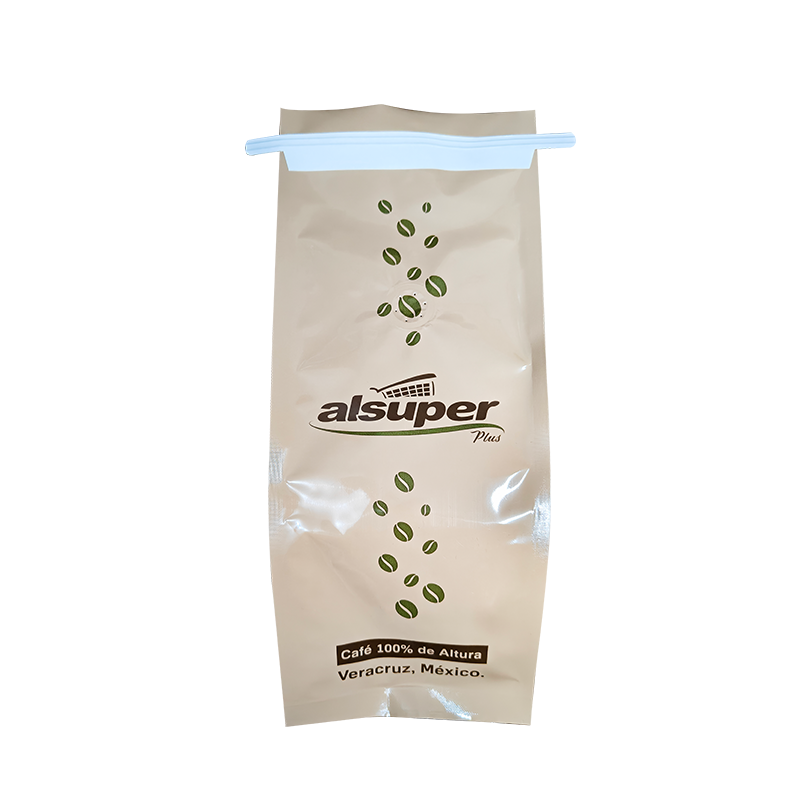
A coffee flexible packaging bag must do more than hold beans—it must actively manage the internal atmosphere to prevent staling. Freshly roasted coffee emits carbon dioxide for days after roasting, and without a controlled release mechanism, the bag inflates and eventually bursts or leaks at the seal. The solution is a one-way degassing valve paired with a high-barrier laminate that blocks oxygen ingress while letting excess CO₂ escape. Selecting the wrong film structure or an inadequate valve causes flavor loss faster than almost any other packaging mistake, rendering even the finest roast bland within two weeks.
Content
Barrier Properties That Determine Shelf Life
Oxygen is the primary enemy of roasted coffee, triggering oxidative rancidity of the oils that carry aroma and flavor. A flexible package must deliver an oxygen transmission rate below 0.5 cc/m²/day at 23°C and 50% relative humidity to maintain sensory quality over a 12-week shelf life. Standard polyethylene or polypropylene films without barrier coatings allow oxygen transmission rates exceeding 1,000 cc/m²/day and are wholly unsuited for whole-bean or ground coffee beyond short-term retail turnover.
The industry workhorse structure is a triplex laminate of polyethylene terephthalate for printability and stiffness, aluminum foil or metallized polyethylene terephthalate for the gas barrier, and linear low-density polyethylene for the sealant layer. Foil-based laminates achieve an oxygen transmission rate of effectively zero, while metallized structures deliver values around 0.1–0.3 cc/m²/day. The trade-off is that foil cannot pass through metal detectors, a critical consideration for food safety compliance in facilities using detection-based foreign object controls.
One-Way Degassing Valve Integration
Coffee emits the bulk of its CO₂ within the first 48 to 72 hours after roasting, with peak volumes reaching 3–5 cc per gram of coffee. A flexible bag without a valve trapped in a sealed carton will balloon and risk seal failure. The one-way valve, typically a small plastic disc with a silicone diaphragm applied to a punched hole in the laminate, opens at a cracking pressure of roughly 3–5 mbar. This allows CO₂ to vent while maintaining a partial pressure barrier against external oxygen entry.
Valve placement matters for both function and aesthetics. Mounting the valve on the front panel below the top seal ensures that when bags are stacked horizontally during distribution, the valve remains unobstructed. Valves placed too close to the top seal risk being folded over during heat-sealing, which compromises the silicone diaphragm. A minimum distance of 25 mm from the top seal edge is a reliable guideline for standard stand-up pouch formats. On a gusseted side-panel bag, positioning the valve near the upper corner of the front panel prevents gusset folds from blocking gas escape.
Seal Integrity and Heat-Seal Parameters
A high-barrier laminate is worthless if the seals fail. Coffee packaging undergoes thermal stress during the sealing process and mechanical stress during transport. The critical seal is the top closure, which the consumer reseals multiple times. A peelable yet hermetic seal requires precise control of seal bar temperature, dwell time, and pressure. For a typical PET/metallized-PET/LLDPE structure, the seal initiation temperature sits around 105°C, with an optimal sealing window between 120°C and 140°C at 0.5 seconds dwell time. Temperatures above 150°C risk burning through the sealant layer and creating pinholes visible only under magnification.
Seal strength testing should form part of every production run's quality control. A minimum seal strength of 2.5 N per 15 mm width, tested according to ASTM F88, provides adequate burst resistance for bags up to 500 grams. Below this threshold, drop tests from 1 meter onto a hard surface frequently cause seal rupture, especially at the corners where stress concentrates. Gusseted bags amplify corner stress, demanding seal strengths closer to 3.5 N per 15 mm width to survive distribution.
| Laminate Structure | OTR (cc/m²/day) | MVTR (g/m²/day) | Shelf Life Estimate |
|---|---|---|---|
| PET / Alu Foil / LLDPE | <0.01 | <0.1 | 18–24 months |
| PET / Met-PET / LLDPE | 0.1–0.3 | 0.5–1.0 | 9–12 months |
| Kraft Paper / PE / Alu / PE | <0.01 | <0.1 | 18–24 months |
Resealable Features and Consumer Convenience
A flexible coffee bag that cannot be resealed effectively loses its barrier function the moment the consumer opens it. Tin ties integrated into a folded-over top provide a simple mechanical closure but offer no gas barrier once the original seal is broken. Press-to-close zippers, extruded from LLDPE and heat-sealed to the inner sealant layer, restore a partial barrier after opening. A well-designed zipper profile retains enough integrity to limit oxygen ingress to roughly 5–8 cc/m²/day in the resealed state—an order of magnitude worse than the original hermetic seal, but sufficient to extend the useful life of the coffee from three days to three weeks after opening.
Zipper alignment during pouch converting demands tight tolerances. A misaligned zipper offset by even 1 mm from the pouch side seal creates a channel that bypasses the zipper entirely. Automated optical inspection systems on form-fill-seal lines now detect such defects at production speeds, but smaller roasters buying pre-made pouches should verify zipper integrity by submerging the empty sealed pouch in water and applying gentle internal air pressure—bubbles at the zipper terminus indicate a leak path.
Formats, Gussets, and Shelf Presentation
The stand-up pouch with a bottom gusset dominates specialty coffee retail because it provides a flat front panel for branding and a wide base for shelf stability. Quad-seal or box-bottom pouches offer superior cube efficiency for shipping, reducing empty space volume by roughly 15% compared to standard flat-bottom stand-up pouches. Side-gusset pouches, often sealed with a tin tie, suit larger 1–2 kg formats destined for food service where retail presentation matters less than cost and fill speed.
Pouch dimensions should match the fill weight to minimize headspace. Excess headspace traps oxygen that accelerates staling regardless of barrier properties. A 250-gram whole bean fill requires a pouch with an internal volume of roughly 600–700 ml after sealing to allow for bean bulk density of 0.35–0.40 g/ml without excessive empty air. Gas-flushing with nitrogen immediately before sealing displaces residual headspace oxygen, dropping the internal oxygen concentration below 2%—a process step that adds less than one second to the seal cycle but extends shelf life by weeks.
Sustainable Material Transitions
The multi-material laminates that make excellent coffee bags also make them unrecyclable in conventional post-consumer streams. The aluminum foil layer in particular dooms the structure to landfill or incineration. Mono-material polyethylene structures aim to solve this, but high-density polyethylene alone lacks the oxygen barrier of foil or metallized PET. New ethylene vinyl alcohol copolymer layers, when sandwiched between polyethylene skins, achieve oxygen transmission rates of 0.5–1.0 cc/m²/day—approaching metallized PET performance while maintaining full polyethylene recyclability in appropriate streams.
The trade-off is moisture sensitivity. EVOH's barrier properties degrade sharply above 70% relative humidity, which means a mono-material coffee bag stored in a humid environment may lose barrier function partway through its intended shelf life. Compostable structures using polylactic acid and cellulose-based films face an even steeper barrier challenge, with oxygen transmission rates rarely dropping below 50 cc/m²/day—two orders of magnitude worse than required for multi-week coffee freshness. These materials currently suit only pre-ground coffee sold for immediate consumption through rapid-turnover channels.
Quality Control and Incoming Inspection
Relying on a supplier's certificate of conformance without incoming inspection invites undetected failures. Every batch of flexible coffee bags should undergo a minimal test protocol: visual inspection for pin holes in the laminate using a backlight table, seal strength testing on at least three samples per batch, and a dye penetration test on the degassing valve seal area. For the dye test, a colored penetrant applied to the inside of the valve seat reveals capillary leaks invisible to the naked eye. A single leaking bag in a pallet can contaminate an entire shipment with the stale odor that signals oxidation to consumers long before they taste the coffee.
Storage of empty pouches before filling also affects performance. Exposure to temperatures above 40°C in a warehouse or shipping container partially anneals the heat-seal layer, shifting its seal initiation temperature upward. A roaster that validates its sealing parameters with fresh pouches may find that pouches stored through a hot summer require a 5–10°C higher seal bar temperature to achieve the same seal strength—a shift that, if undetected, causes weak seals and customer complaints of bags popping open.
Product Categories
Mainly engaged in various types of packaging boxes made of different materials and various paper products.



-
Email
[email protected]Phone Number
+86-15300896380 -
Address
No. 58 Hongmudan Road, Songjiang District, Shanghai, China -
Quick Links
Home About Us Service Industries News Contact -
Products
Food Packaging Cosmetic Packaging Gift Wrapping Apparel Packaging Home Textile Packaging Other Packaging Paper Packaging Boxes -
feel free to contact us

