
 English
  日本語
日本語  Français
  Español
  عربى
عربى  italiano

Industry News
 Oct 13, 2026
 Posted by Administrator
Custom Sustainable Packaging: Materials, Costs, Compliance and Design Decisions
Two quotes land on the same desk for a 20,000-unit skincare carton. The first uses virgin coated board, a PET window and film lamination at $0.42 per unit. The second uses 85% recycled kraft board, a die-cut fiber window and a water-based barrier coating at $0.39. The second carton is 14% lighter, fits 9,600 units per pallet instead of 8,200, and still passes the same 1.2 m drop test. The artwork never changed.
That gap is not a slogan. It is the result of three decisions made before the dieline is drawn: which disposal stream the pack must fit, how much recycled fiber the structure can carry, and whether the surface is coated or laminated.
Bottom line: custom sustainable packaging is a specification decision, not a material label. In most B2B projects, the largest recyclability, freight and cost gains come from three early choices: mono-material structure, recycled fiber content, and printing or coating chemistry. Fix those before artwork, and recyclability and unit economics usually move in the same direction.
Everything that follows is about how to write that specification so it survives contact with a press, a pallet and a compliance audit.
Content
How Sustainability Gets Engineered Into a Package
A sustainable pack is the output of four engineering levers, and each one carries a number on the specification sheet. Treating them as a single "green material" choice is where most projects lose money.
- Structure. Mono-material construction, glue-free folding, fewer inserts and reduced wall thickness. A pack that cannot be pulled apart by hand in three seconds will not be separated at home.
- Substrate. Post-consumer recycled fiber content, chain-of-custody documentation, and virgin fiber only where strength or direct food contact genuinely requires it.
- Surface. Water-based dispersion coatings instead of polyethylene lamination, plus low-migration inks where the pack touches food or cosmetics.
- Closure and labelling. Paper-based tape, water-based adhesives, linerless or paper-face labels that share the same disposal stream as the board.
Mono-material wins first
A PE-film lamination or a glued-in plastic window sends a fiber pack to the residue bin, no matter how recycled the board is.
Recycled content has a floor
80–100% post-consumer fiber is routine for dry goods. High-humidity and food-contact formats often settle at 50–80% before strength or migration limits bite.
Coatings beat laminates
A dispersion coating of roughly 4–8 g/m² replaces a 15–25 µm PE layer, keeps the fiber in the paper stream and typically costs 5–15% less at volume.
Weight is a metric
Shaving 40 g/m² from a 0.05 m² carton across 500,000 units removes about one tonne of board, and often a pallet layer of height.
On a 13,000 m² converting floor running die-cutting, foil stamping and automatic box gluing, the bottleneck is rarely the material itself. It is whether the new board runs at the same press speed and yield as the old one, and whether the glue-free lock holds after a week in a humid warehouse.
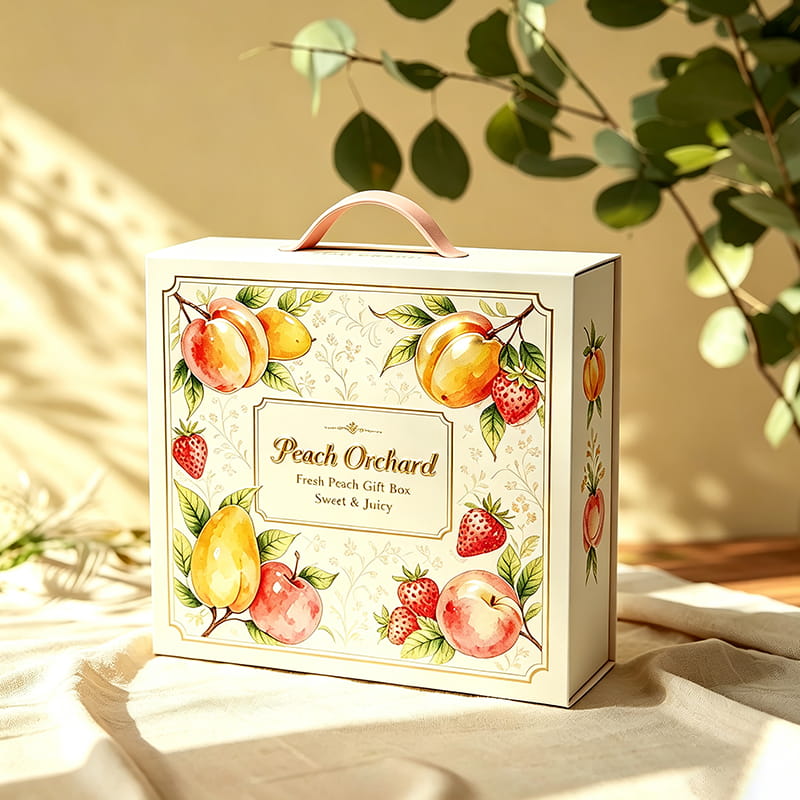 Glue-Free Folding Fresh Fruit Gift Box with Integrated HandleA die-cut, adhesive-free clamshell box that folds flat and assembles by hand, useful when glue-free lock reliability and storage volume matter.View Product →
Material Options Compared: What Each Format Trades Away
There is no universally sustainable substrate. Each format buys performance in one column and pays for it in another, and the cost index is where most briefs go wrong.
The Four Numbers That Actually Decide Payback
Sustainability gains are not evenly distributed. Across recent custom programs, the measurable improvement breaks down roughly like this.
34%
28%
18%
14%
6%
Structure and substrate account for roughly six out of every ten points of improvement, which is why redesigning the pack beats swapping one "greener" board for another on the same dieline. The freight item looks small in percentage terms, but it is usually the fastest to bank: moving from 8,200 to 9,600 units per pallet is a 17% cube gain that shows up on the first outbound invoice, and about 15% fewer pallets leaving the dock.
Where Sustainable Formats Are Selling Today
Demand is not spread evenly across industries. This is a representative mix of custom sustainable packaging enquiries by end market.
- Food and beverage: 36%
- Beauty and personal care: 24%
- Gifting and seasonal: 18%
- Apparel and home textile: 14%
- Other: 8%
Food leads because takeaway and retail formats are already fiber-first, so a mono-material switch needs no consumer education. Beauty follows for a different reason: premium rigid boxes can absorb a higher unit cost, and uncoated or dispersion-coated boards still hold foil and embossing well. Apparel and home textile sit lower mainly because poly bags are cheap and invisible to the customer, which makes them the last thing a brand re-specifies.
Takeaway is the clearest example of a fast win. A semi-rigid kraft box replaces a laminated carton and a plastic liner at the same time, and pairs naturally with recyclable kraft takeaway bags so the whole delivery arrives in one disposal stream.
 Semi-Rigid Kraft Paper Takeaway Box for Food DeliveryA self-supporting kraft takeaway box for meals, relevant where delivery packaging needs one disposal stream and less laminated or plastic material.View Product →
A Six-Step Selection and ROI Sequence
Changing the sequence is the most common reason a sustainable redesign runs over budget. Follow it in order and the specification stays stable.
- Fix the disposal stream first. Paper, PE collection point or industrial compost. Everything else is downstream of this answer.
- Lock the structure. Go mono-material, use a die-cut window instead of a glued one, and eliminate inserts where the board can do the work.
- Choose substrate and coating together. A coating decision can invalidate a fiber decision, particularly on recycled board with a rough surface.
- Prototype and test. Drop test, compression, grease resistance, and migration screening if the pack touches food.
- Trial on the line and on a pallet. Press speed, die wear, glue tack and pallet cube are the four things a sample never shows you.
- Freeze and version the specification. One spec sheet, one revision number, requalified once a year or when a supplier changes.
Payback normally arrives in three places. Unit cost: a 5% reduction on 200,000 units at $0.40 saves $4,000. Freight: fewer pallets per container and less damage in transit. Compliance: extended producer responsibility fees in Europe are increasingly modulated by recyclability, and the spread between the best and worst fee band is often two to four times per tonne. That fee line alone can outweigh a small unit-cost premium.
The real risk is not the material price, it is tooling and minimum order quantity. A new die, a coating trial and a higher MOQ can absorb the first year of savings if the format changes twice before launch. Commit to one structure, then optimise the substrate.
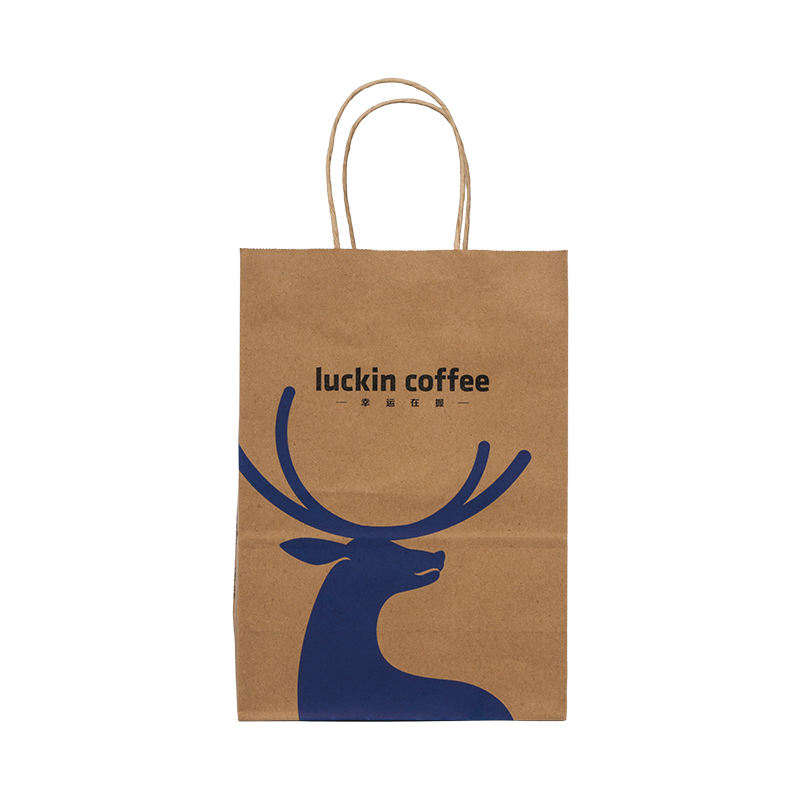
 Customizable Kraft Paper Bag for General Gift PackagingA customizable kraft paper bag for gifts and daily items, relevant where a single structure must be fixed before optimizing the paper and coating specification.View Product →
Compliance and Maintenance Notes That Catch Buyers Out
- Recycled content claims need weight-based evidence. Keep supplier declarations and chain-of-custody certificates on file, not just a percentage in a brief.
- Extended producer responsibility fees are modulated. Mono-material packs usually land in a better fee band than laminated equivalents, and the difference is charged per tonne placed on market.
- Food contact is a separate approval. Paper and board are regulated under frameworks such as EU 10/2011 and FDA 21 CFR 176, and recycled fiber used near fatty foods should be screened for mineral oil migration.
- Test coating durability before approving it. Water-based coatings vary widely in rub and scuff resistance, which matters on a transport that slides against itself for days.
- Control storage humidity. Recycled fiber gains and loses moisture faster than virgin stock, so a board conditioned at 45–55% relative humidity behaves predictably while a warehouse floor in winter does not.
None of this requires a new category of supplier. It requires a specification that states the disposal stream, the recycled content in grams per square metre, the coating weight, and the test method used to prove each one. Written that way, a custom sustainable packaging project is auditable, quotable and repeatable on the next order, which is ultimately what makes it cheaper than the laminated alternative it replaced.
Product Categories
Mainly engaged in various types of packaging boxes made of different materials and various paper products.


-
Email
[email protected]Phone Number
+86-15300896380 -
Address
No. 58 Hongmudan Road, Songjiang District, Shanghai, China -
Quick Links
Home About Us Service Industries News Contact -
Products
Food Packaging Cosmetic Packaging Gift Wrapping Apparel Packaging Home Textile Packaging Other Packaging Paper Packaging Boxes -
feel free to contact us

