
 English
  日本語
日本語  Français
  Español
  عربى
عربى  italiano

Industry News
 Apr 13, 2026
 Posted by Administrator
How Coated Paper Adhesive Labels Are Transforming Food & Candy Packaging in 2026?
Content
- 1 Why Food Packaging Is More Than Just a Container(Shanghai Jingmai Packaging Technology Co., Ltd.)
- 2 The Structural Roles of Modern Food Packaging
- 3 What Makes Coated Paper Adhesive Labels Ideal for Food Packaging
- 4 Candy Packaging: Where Aesthetics and Function Intersect
- 5 Comparing Common Food Packaging Label Types
- 6 Practical Tips for Optimizing Label Performance on Food Packaging
Why Food Packaging Is More Than Just a Container(Shanghai Jingmai Packaging Technology Co., Ltd.)
Food packaging serves a role far greater than simply holding a product together. It acts as the first line of defense against contamination, the primary vehicle for regulatory communication, and the most immediate touchpoint between a brand and its customer. Whether you're dealing with bulk dry goods, chilled ready meals, or artisan candy packaging, the materials and labeling choices you make directly affect product safety, shelf appeal, and consumer trust. Understanding the full scope of food packaging — from structural design to surface labeling — enables manufacturers and retailers to make smarter, more strategic decisions at every stage of the supply chain.
At its core, food packaging must balance four competing demands: protection, compliance, convenience, and marketing. Achieving all four simultaneously requires careful selection of packaging formats and labeling systems. That's where specialized solutions like the coated paper adhesive label enter the picture — offering a cost-efficient, highly customizable way to meet strict food industry standards without sacrificing visual impact.
The Structural Roles of Modern Food Packaging
Food packaging today is engineered to perform across multiple functional dimensions. Each layer of a packaging system — the primary container, secondary wrap, and applied label — carries specific responsibilities that together ensure the product reaches the consumer in optimal condition.
Barrier and Preservation Functions
Effective food packaging creates a controlled micro-environment around the product. Oxygen-barrier films prevent oxidation in snacks and processed meats, while moisture-resistant zipper bags extend the freshness of dried fruits and grains. Rigid gift boxes with foam inserts cushion fragile confections during transit, making them a popular choice in premium candy packaging. Vacuum-sealed pouches eliminate air pockets that harbor bacteria, dramatically extending shelf life without the need for additional preservatives. Selecting the wrong packaging structure — even with excellent labeling — can render these protections void.
Regulatory Compliance Requirements
Food safety regulations across markets require that packaging communicate specific information clearly and accurately. At minimum, food packaging must display the product name, full ingredient list, allergen declarations, net weight, production date, expiration or best-before date, and manufacturer details. Failure to meet these requirements can result in product recalls, fines, and lasting reputational damage. Labels applied to packaging — particularly coated paper adhesive labels — must be durable enough to retain this information without smearing, peeling, or fading across varying storage and retail conditions.
What Makes Coated Paper Adhesive Labels Ideal for Food Packaging
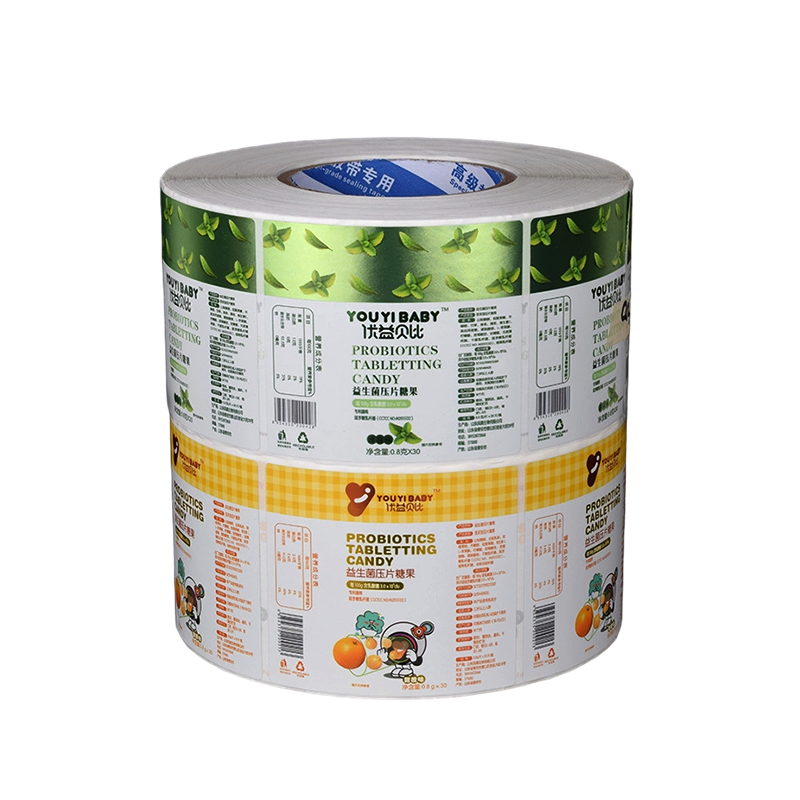
Among the many labeling materials available, the coated paper adhesive label stands out as one of the most versatile and cost-effective solutions for food packaging applications. Its popularity spans categories from bottled sauces and bakery items to specialty candy packaging, largely because it offers a compelling combination of printability, adhesion performance, and design flexibility.
Coated paper features a smooth, treated surface that accepts ink with exceptional precision. This makes it ideal for high-resolution graphics, fine text, and vibrant color reproduction — all of which are critical when conveying brand identity and regulatory information simultaneously. The adhesive backing ensures a firm bond to a wide variety of packaging substrates, including glass, plastic, paperboard, and metal tins.
Key advantages of coated paper adhesive labels in food packaging include:
- Superior ink absorption for sharp, accurate text and imagery — essential for small-font regulatory details
- Compatibility with offset, digital, and flexographic printing processes, offering production flexibility at different volume levels
- Available in gloss, matte, and silk finishes to match different brand aesthetics — from clean and clinical to luxurious and warm
- Cost efficiency compared to synthetic label materials, making it accessible for small-batch producers and large manufacturers alike
- Easy die-cutting into custom shapes and sizes, supporting unique label geometries for curved, flat, or irregular packaging surfaces
For brands managing multiple SKUs across a product line, coated paper adhesive labels allow fast, economical changeovers in print design without retooling the underlying packaging structure — a significant operational advantage in competitive food markets.
Candy Packaging: Where Aesthetics and Function Intersect
Candy packaging occupies a unique position in the food industry. It must be visually captivating enough to attract impulse purchases while being structurally sound enough to protect delicate products — chocolates, gummies, hard candies, and truffles — from heat, humidity, and mechanical stress. This dual requirement makes label selection especially critical in the confectionery segment.
Premium candy packaging often uses rigid boxes, foil-wrapped interiors, and window-cut cartons to convey a sense of indulgence. In these contexts, a coated paper adhesive label applied to the exterior serves as the primary branding surface, carrying the logo, flavor variant, ingredient list, and gifting message. The smooth finish of coated paper allows gold and silver foil stamping, embossing, and UV spot varnish — finishing techniques that significantly elevate perceived product value.
For everyday candy packaging such as stand-up pouches, flow packs, and pillow bags, labels must withstand retail handling, stacking pressure, and temperature fluctuations. A well-chosen coated paper adhesive label with a permanent adhesive ensures it stays firmly in place from the factory floor to the point of sale — without lifting at edges or leaving adhesive residue on the packaging surface.
Comparing Common Food Packaging Label Types
Selecting the right label material requires weighing several factors, including application environment, print method, and budget. The following comparison provides a practical overview of the most widely used food label types:
| Label Type | Print Quality | Moisture Resistance | Cost Level | Best Use Case |
| Coated Paper Adhesive Label | High | Moderate | Low–Medium | Dry goods, candy, gift boxes |
| BOPP Synthetic Label | High | Excellent | Medium–High | Chilled, frozen, or wet products |
| Kraft Paper Label | Medium | Low | Low | Organic or eco-positioned products |
| Thermal Transfer Label | Medium | Moderate | Low | Variable data, batch codes, logistics |
For most ambient-temperature food packaging scenarios — especially candy packaging and packaged dry snacks — the coated paper adhesive label offers the best balance of visual performance and cost control.
Practical Tips for Optimizing Label Performance on Food Packaging
Even the best label material will underperform if applied incorrectly or specified without considering the end-use environment. The following practices help food brands extract maximum value from their coated paper adhesive label investment:
- Match adhesive tack to your packaging substrate — permanent adhesives work best for glass and rigid plastics, while repositionable options suit corrugated secondary packaging
- Apply a varnish or laminate over printed coated paper labels when products will be displayed in humid retail environments or near refrigeration units
- Confirm that all label inks and adhesives meet food-contact safety standards in your target market, including FDA, EU 10/2011, or equivalent regional regulations
- Design with minimum font sizes in mind — regulatory text on food packaging must typically be readable at 1.2mm to 1.8mm cap height depending on jurisdiction
- Test label adhesion and print durability under simulated storage and transit conditions before committing to a full production run
By treating the label not as an afterthought but as an integral component of the food packaging system, brands can dramatically improve compliance accuracy, reduce label-related waste, and deliver a more consistent consumer experience across every product they bring to market.
Product Categories
Mainly engaged in various types of packaging boxes made of different materials and various paper products.


-
Email
[email protected]Phone Number
+86-15300896380 -
Address
No. 58 Hongmudan Road, Songjiang District, Shanghai, China -
Quick Links
Home About Us Service Industries News Contact -
Products
Food Packaging Cosmetic Packaging Gift Wrapping Apparel Packaging Home Textile Packaging Other Packaging Paper Packaging Boxes -
feel free to contact us

