
 English
  日本語
日本語  Français
  Español
  عربى
عربى  italiano

Industry News
 Jun 08, 2026
 Posted by Administrator
Moisture-Proof Tea Packaging Box: Barrier Materials, Formats & Custom OEM
Tea is hygroscopic by nature. Leave a batch of premium loose-leaf oolong exposed to ambient air for a single day, and the moisture it absorbs begins rewriting its chemistry—dull color, flattened aroma, shortened shelf life. The box holding your tea is not a passive container. It is an active barrier, and the difference between a well-engineered moisture-proof tea packaging box and a decorative-only solution is measurable in months of product life.
For brands sourcing custom tea packaging at scale, understanding what actually protects tea quality—and how that protection integrates with premium presentation—is the foundation of a sound procurement decision.
Content
- 1 Why Tea Demands More Than a Pretty Box
- 2 The Core Barrier Technologies in Moisture-Proof Tea Packaging
- 3 Choosing the Right Structure for Each Tea Format
- 4 Luxury Meets Function: Inner Tray and Gift Box Integration
- 5 Biodegradable Tea Gift Boxes: Sustainability Without Compromise
- 6 Custom OEM Tea Packaging: From Prototype to Bulk Order
Why Tea Demands More Than a Pretty Box
Tea leaves are porous, lightweight, and chemically active. They respond to three environmental stressors with particular speed: moisture, oxygen, and light. Moisture ingress is the fastest threat. Industry testing shows that at 80% relative humidity, green tea can absorb moisture equivalent to roughly 5% of its own weight within 24 hours of exposure—triggering surface oxidation that degrades both flavor and color before the product ever reaches a consumer.
Oxygen accelerates the breakdown of tea polyphenols, the antioxidant compounds responsible for both health benefits and flavor complexity. Light—particularly UV—degrades volatile aromatic compounds even through translucent packaging materials. For black tea, oolong, and especially delicate white or green teas, these three factors working in combination can reduce effective shelf life from 18–24 months to under 6 months when packaging is inadequate.
The industry benchmark for acceptable moisture vapor transmission rate (MVTR) in tea packaging is under 0.5 g/m²/day. Packaging that only meets 1.0 g/m²/day—a figure some suppliers describe as acceptable—is unsuitable for any tea sitting on a retail shelf longer than 30 days. This is not a marginal difference; it is the line between a product that performs and one that disappoints.
The Core Barrier Technologies in Moisture-Proof Tea Packaging
Effective protection relies on layering multiple barrier materials, each addressing a specific threat. No single substrate does everything well.
- Aluminum foil inner liner: A continuous metallic layer creates a hermetic wall at the molecular level, blocking oxygen, moisture, and light simultaneously. Food-grade aluminum foil laminates (typically 7–12 micron) paired with a polyethylene sealant layer deliver the highest barrier performance available for paperboard-based tea gift boxes. This is the standard choice for export-grade and premium retail packaging.
- PE film barrier layer: Polyethylene coatings applied to the inner surface of paperboard are a cost-effective option for lower-humidity environments or shorter shelf-life products. PE film resists moisture ingress effectively but offers weaker oxygen barrier performance than foil, making it better suited to black teas with inherently higher oxidation tolerance.
- Opaque paperboard outer shell: The outer box itself plays a functional role beyond branding. Solid bleached sulfate (SBS) or gray-core paperboard at 300–450 gsm blocks light penetration and provides structural rigidity. Opaque construction eliminates UV degradation pathways and maintains internal temperature stability by reducing radiant heat transfer.
The combination of an aluminum foil inner bag or liner with a well-constructed opaque paperboard outer box is the most reliable configuration for food-safe flexible packaging with barrier properties integrated into rigid gift box formats—covering moisture, oxygen, and light in a single packaging system.
Choosing the Right Structure for Each Tea Format
Tea is not a monolithic product category, and the structural requirements of its packaging vary considerably by format. Sourcing a single box style for multiple tea types is a common procurement mistake that leads to either overengineered costs or underprotected products.
Loose-leaf tea requires resealable closure mechanisms—magnetic flap closures, press-fit lids, or ribbon-pull drawers—combined with an inner foil bag that can be resealed after each use. The primary risk is repeated air exposure over the product's consumption period. Compartment-style boxes with individual inner bags for multiple tea varieties are particularly effective for retail assortment packaging.
Tea bags and sachets are typically pre-sealed at the individual unit level, which shifts the box's role toward display, brand communication, and transit protection. Here, crush resistance matters as much as moisture barrier—the paperboard must be rigid enough to prevent deformation during shipping that could rupture individual sachets.
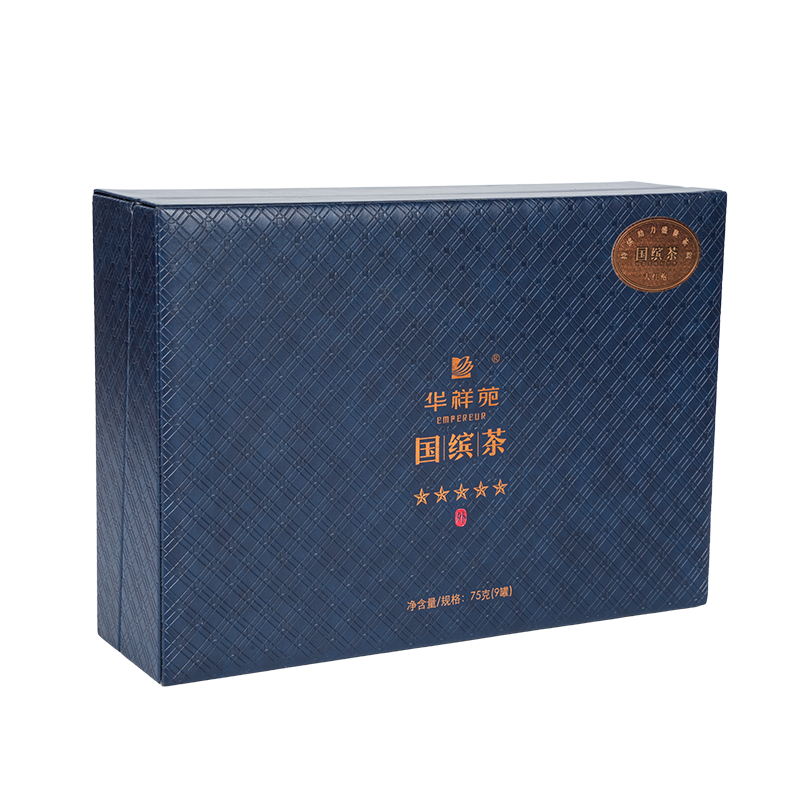
Compressed tea cakes and pu-erh discs represent the most demanding structural challenge. These dense, brittle formats are highly susceptible to edge chipping and surface cracking under impact. Packaging for compressed formats needs a rigid outer box (minimum 400 gsm board), internal foam or molded pulp cradles to immobilize the cake, and a breathable inner wrap rather than a sealed foil bag—since aged pu-erh requires minimal oxygen exchange to continue its natural fermentation process. Our custom tea packaging boxes for loose leaf and tea bags are engineered across all three formats with format-specific internal configurations.
Luxury Meets Function: Inner Tray and Gift Box Integration
The shift from functional packaging to gifting packaging does not mean trading protection for aesthetics. Done correctly, the two reinforce each other. A rigid gift box with a fitted inner tray does more than look elegant—the tray prevents movement inside the box, eliminating impact damage that loose packing cannot prevent.
Common inner tray configurations for tea gift packaging include:
- Thermoformed PET or paper pulp trays molded to the exact footprint of tea tins, canisters, or sachets
- Ribbon-pull foam inserts for high-end single-origin loose-leaf presentations
- Multi-compartment cardboard dividers for assortment sets featuring three to six tea varieties
- Silk or satin lining applied over a rigid backing for ultra-premium collections
For festival gifting and corporate gift scenarios, integrated carry handles and coordinated outer gift bags eliminate the need for secondary packaging at point of sale. A well-engineered tea gift box should arrive at the recipient ready to present—no additional wrapping required. Explore our festive and gift wrapping packaging solutions for configurations designed around seasonal and business gifting occasions.
Surface finishing—hot foil stamping, embossing, soft-touch lamination, or spot UV—should be selected not just for visual effect but for durability. Soft-touch matte lamination, for instance, adds scratch resistance to the outer surface, which matters when boxes are stacked in shipping or retail environments.
Biodegradable Tea Gift Boxes: Sustainability Without Compromise
Consumer expectations around packaging sustainability have moved from preference to purchasing criterion in premium tea markets. A biodegradable tea gift box is no longer a niche option—it is increasingly the default expectation among buyers in Europe, North America, and sustainability-focused retail channels across Asia.
The practical path to genuinely sustainable tea packaging involves several material choices that do not require sacrificing barrier performance:
- FSC-certified recycled paperboard: Food-grade recycled board at 350–450 gsm provides structural integrity comparable to virgin fiber alternatives. FSC certification confirms responsible sourcing and satisfies B2B procurement sustainability requirements.
- Water-based inks: Replacing solvent-based inks eliminates VOC emissions and maintains full recyclability of the printed board. Color depth and resolution with modern water-based systems are equivalent to conventional alternatives.
- Compostable inner liners: PLA (polylactic acid) film and cellulose-based barrier films now offer moisture and oxygen protection approaching aluminum foil performance for shorter shelf-life products, while remaining fully compostable in industrial composting conditions.
- Mono-material construction: Where possible, designing packaging from a single material family (all-paper, or all-PLA) simplifies end-of-life sorting and maximizes actual recycling rates at consumer level.
Brands combining premium tea positioning with credible sustainability claims gain a compounding advantage: higher perceived value and alignment with the values of their most loyal customer segment. Similar barrier and sustainability engineering applies to our coffee and specialty beverage packaging lines, which share many structural requirements with premium tea formats.
Custom OEM Tea Packaging: From Prototype to Bulk Order
Sourcing moisture-proof tea packaging from a direct OEM factory compresses the gap between design intent and finished product—and eliminates the margin layers that distributor-sourced packaging adds to unit cost. As a Shanghai-based manufacturer with dedicated tea packaging production lines, our process moves from initial specification to confirmed sample in a structured sequence designed to eliminate surprises at mass production.
The standard workflow for custom orders:
- Brief and specification: Tea format (loose leaf, bags, cake, tin), target quantity, target unit cost, barrier requirements, and any regulatory standards (FDA food contact, EU food-safe compliance) are confirmed before design begins.
- Structural engineering: Box dimensions, board weight, barrier liner configuration, and inner tray design are specified. For compressed tea cakes, impact testing parameters are agreed at this stage.
- 3D mockup and white dummy: A physical unprinted sample confirms fit, closure function, and inner tray performance before printing costs are committed.
- Pre-production color sample: Printed sample confirms color accuracy, surface finish, foil stamping registration, and emboss depth.
- Mass production and QC: Minimum order quantities typically start from 500 units for standard configurations, with volume pricing available from 2,000 units. Standard lead time from confirmed artwork to shipment is 15–20 working days.
Custom packaging built to your tea product's actual barrier needs—not generic off-the-shelf dimensions—protects product quality, reduces transit damage claims, and gives your brand a packaging asset that performs as well as it presents. Contact our team to request a free structural consultation and sample evaluation for your tea packaging project.
Product Categories
Mainly engaged in various types of packaging boxes made of different materials and various paper products.


-
Email
[email protected]Phone Number
+86-15300896380 -
Address
No. 58 Hongmudan Road, Songjiang District, Shanghai, China -
Quick Links
Home About Us Service Industries News Contact -
Products
Food Packaging Cosmetic Packaging Gift Wrapping Apparel Packaging Home Textile Packaging Other Packaging Paper Packaging Boxes -
feel free to contact us

