
 English
  日本語
日本語  Français
  Español
  عربى
عربى  italiano

Industry News
 Jun 15, 2026
 Posted by Administrator
Stand-Up Pouches for Food: Types, Films, Features & Selection Guide
Content
- 1 What Makes Stand-Up Pouches Different from Other Flexible Food Packaging
- 2 Types of Stand-Up Pouches for Food
- 3 Laminated Film Structures and Barrier Performance
- 4 Functional Add-Ons That Elevate the Package
- 5 Food Categories Best Suited for Stand-Up Pouches
- 6 How to Choose the Right Stand-Up Pouch for Your Product
What Makes Stand-Up Pouches Different from Other Flexible Food Packaging
Flexible food packaging covers a wide range of formats — flat pouches, back-seal bags, three-side-seal sachets, rollstock film — but stand-up pouches occupy a distinct position among them. The defining feature is a gusseted bottom panel: a folded section of film that expands outward when the pouch is filled, creating a stable base that allows the package to stand upright on its own. That single structural detail changes everything about how the product is displayed, handled, and experienced by the end consumer.
A flat pouch requires a hook, a rack, or a secondary display to remain visible on shelf. A stand-up pouch needs nothing but the shelf itself. It presents the front panel at eye level, uses the full surface area for branding, and remains stable throughout the retail journey without external support. For food brands competing in crowded retail environments, that shelf presence is not a cosmetic benefit — it is a commercial one.
Beyond the shelf, stand-up pouches share all the core advantages of flexible food packaging solutions more broadly: significantly lighter weight than rigid alternatives, lower material consumption per unit of product, better pallet density, and compatibility with high-speed automated filling lines. The combination of functional performance and retail impact is why stand-up pouches have become the default format across snack foods, coffee, tea, pet food, and an expanding range of other food categories.
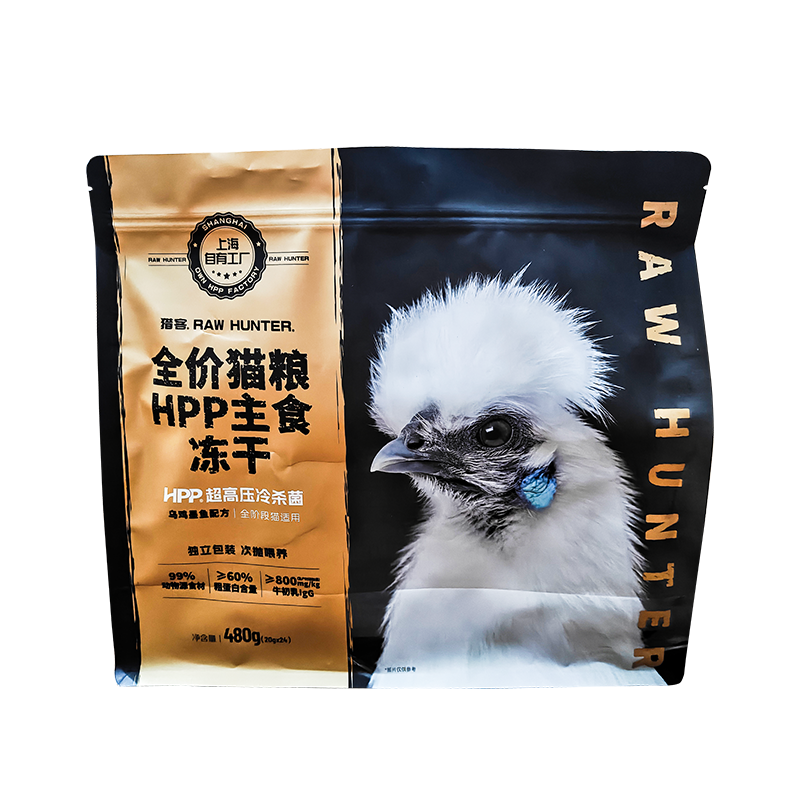
Types of Stand-Up Pouches for Food
Stand-up pouches are not a single product — they are a format family with distinct variants suited to different food types, shelf-life requirements, and consumer usage patterns.
Zipper stand-up pouches are the most widely used configuration for dry foods. A resealable zipper strip runs across the top of the pouch, below the heat-seal line, allowing consumers to open and reclose the package repeatedly without compromising freshness. Nuts, granola, dried fruit, coffee beans, tea leaves, and pet treats all benefit from this format because the product is rarely consumed in a single serving. The zipper eliminates the need for a secondary storage container and extends the in-use shelf life of the product after first opening.
Spouted stand-up pouches add a fitment — typically a screw-cap spout — that enables controlled pouring or dispensing of liquid, semi-liquid, or pourable dry products. Sauces, purées, cooking oils, protein powders, and infant food are common applications. The spout also allows the pouch to be resealed after each use, making it a practical alternative to bottles and jars for products consumed gradually over multiple sittings.
Clear-window stand-up pouches incorporate a transparent film panel on the front or back face, allowing consumers to see the product directly through the packaging. This format is particularly effective for visually appealing products — whole coffee beans, colorful mixed nuts, dried herbs, or premium tea blends — where the product's appearance itself communicates quality and freshness. The window can cover the full front panel or be cut to a defined shape for added visual interest.
Sealed stand-up pouches without a zipper are used for single-use or single-serving applications where reclosability is unnecessary. Instant soups, seasoning sachets, and individually portioned snack packs fall into this category. They offer the cleanest possible seal line, the highest barrier performance, and the lowest per-unit cost within the stand-up format family.
Laminated Film Structures and Barrier Performance
The performance of any stand-up pouch is determined primarily by its laminated film structure — the combination of materials bonded together to form the pouch wall. Each layer in the laminate serves a specific function, and the correct structure depends on the product's sensitivity to oxygen, moisture, light, and temperature.
PET/AL/PE (polyester / aluminum foil / polyethylene) is the benchmark structure for products requiring maximum protection. The aluminum foil layer provides an almost complete barrier to both oxygen and moisture transmission, while the outer PET layer provides structural rigidity, puncture resistance, and an excellent surface for high-resolution printing. The inner PE layer delivers heat-seal integrity and direct food contact compliance. This structure is standard for roasted coffee, nuts, dried meat snacks, and any product where oxidation or moisture ingress would cause measurable quality degradation. The tradeoff is that aluminum foil makes the pouch opaque — unsuitable for products where visibility is part of the retail proposition.
BOPP/CPP (biaxially oriented polypropylene / cast polypropylene) is a transparent laminate used where product visibility is a priority and the required barrier level is moderate. BOPP provides clarity, stiffness, and good printability; CPP provides the heat-seal layer. This structure works well for dry snacks, candy, confectionery, and any dry product with a relatively short shelf-life target or low sensitivity to oxygen. The absence of a foil layer means the structure is lighter, lower in cost, and fully transparent — but it will not match the shelf-life performance of a foil-containing laminate for oxygen-sensitive products.
Between these two endpoints lies a range of hybrid structures — PET/VMPET/PE (where vacuum-metallized PET replaces solid foil for a lighter, partially transparent barrier), PET/NY/PE (adding a nylon layer for puncture resistance in products with sharp edges or points), and BOPP/AL/PE for applications needing both clarity in certain zones and foil barrier in others. The right choice always starts with the product's specific oxygen transmission rate (OTR) and water vapor transmission rate (WVTR) requirements, not with a default preference for one structure over another.
Functional Add-Ons That Elevate the Package
Stand-up pouches support a range of integrated functional features that can be specified at the design stage to match the pouch precisely to its intended product and user experience.
Degassing valves are one-way pressure-relief valves installed in the pouch wall, typically used for freshly roasted coffee. Roasted coffee releases CO₂ for days after roasting — sealing it into an airtight pouch without a valve would cause the pouch to inflate and potentially fail. The degassing valve allows CO₂ to escape outward while preventing oxygen from entering, enabling roasters to package coffee immediately after roasting without waiting for off-gassing to complete. This directly extends the effective freshness window and eliminates the need for a separate degassing period before sealing.
Tear notches are small cuts in the side seal that provide a controlled starting point for opening the pouch. For single-serve formats or pouches without a zipper, a tear notch allows the consumer to open the package cleanly without scissors, without tearing through the product area, and without generating irregular film edges that could interfere with reuse or disposal.
Resealable zippers, as discussed above, are the most impactful single feature for multi-serving dry food products. Zipper profiles vary — press-to-close, sliding zipper, and child-resistant variants each serve different use cases and consumer demographics. The zipper is typically placed 15–25 mm below the top heat-seal line, which means the pouch can be initially sealed on a standard filling line and the zipper used only after the consumer first opens it.
Clear windows can be incorporated as a defined cutout in an otherwise opaque foil laminate, or as a full-panel transparent zone in a multi-zone structure. The window size and position are design decisions that balance product visibility against barrier performance — a larger window reduces the foil coverage and lowers the overall barrier of the pouch wall in that zone.
Euro hang holes and round hang holes punched into the top seal area allow the pouch to be displayed on a pegboard or hook rack, expanding the retail environments where the product can be merchandised without requiring shelf space.
Food Categories Best Suited for Stand-Up Pouches
Stand-up pouches have proven effective across a wide range of food types, but they deliver the most value in categories where freshness retention, shelf presence, and consumer convenience all matter simultaneously.
Coffee and tea are arguably the categories most transformed by the stand-up pouch format. Whole bean and ground coffee demand a high-barrier foil laminate with a degassing valve — a specification that the stand-up pouch format accommodates cleanly. Premium loose-leaf tea benefits from the zipper reclose feature and clear-window visibility. Our custom coffee packaging bags and tea packaging with resealable zipper are engineered specifically for these requirements.
Nuts, dried fruits, and snack mixes are high-velocity retail SKUs where the stand-up pouch's shelf stability and zipper reclosability directly influence repeat purchase behavior. Consumers who can reseal the package and store it conveniently are more likely to repurchase the same format. The clear-window variant adds visible quality cues for premium positioning.
Seasonings, instant soups, and ready-to-cook mixes benefit from the pouch's precise portioning format and easy-open features. Single-serve sealed pouches work for individual servings; larger zipper pouches suit multi-use seasoning blends that will be accessed repeatedly over weeks.
Health supplements and functional foods — protein powders, collagen peptides, vitamin gummies, and herbal blends — require the same high-barrier protection as coffee and the same resealable convenience as snacks. Health supplement packaging pouches in the stand-up format also support the premium visual identity that supplement brands need to justify their price positioning on shelf.
Pet food and pet treats represent one of the fastest-growing applications for stand-up pouches. Dry kibble, freeze-dried treats, and wet food in retort-compatible pouches all use the format. Pet food brands have been early adopters of high-print-quality flexible packaging because the category competes intensely on visual branding and the target purchaser — the pet owner — responds to premium shelf presence in the same way as a specialty food consumer.
How to Choose the Right Stand-Up Pouch for Your Product
Selecting the correct stand-up pouch specification requires working through a short but precise sequence of product-driven decisions rather than defaulting to a standard configuration.
Start with the product's sensitivity profile. Is it moisture-sensitive, oxygen-sensitive, or both? Does it contain oils that can oxidize? Does it off-gas after processing, like roasted coffee? The answers define the minimum barrier specification required and, from there, the laminate structure. A product with high oxygen sensitivity requires a foil-containing or high-barrier metallized structure. A dry snack with moderate sensitivity can use a cost-effective BOPP/CPP transparent laminate and still achieve adequate shelf life.
Next, define the usage pattern. Is the product single-serve or multi-serve? If consumers will open and reclose the package multiple times over days or weeks, a zipper is not optional — it is the feature that determines whether the product stays fresh and whether the consumer returns for another purchase. If the product is single-serve, a tear notch and a clean seal line are sufficient and more cost-effective.
Then consider filling line compatibility. Pre-made stand-up pouches are delivered to the filling operation in finished form and loaded onto the filling machine. The pouch dimensions, zipper placement, and valve position must all be compatible with the filling equipment's geometry and speed. Confirming these specifications early — before tooling is cut and film is ordered — avoids costly redesign cycles downstream.
Finally, address print and branding requirements. Stand-up pouches support high-resolution rotogravure and flexographic printing across the full panel area. Matte, gloss, and soft-touch finishes, spot UV, and metallic inks are all available. The print specification should be finalized alongside the film structure, because some surface treatments and finishes interact with the laminate adhesion process and need to be engineered in from the start rather than added after the fact.
Product Categories
Mainly engaged in various types of packaging boxes made of different materials and various paper products.


-
Email
[email protected]Phone Number
+86-15300896380 -
Address
No. 58 Hongmudan Road, Songjiang District, Shanghai, China -
Quick Links
Home About Us Service Industries News Contact -
Products
Food Packaging Cosmetic Packaging Gift Wrapping Apparel Packaging Home Textile Packaging Other Packaging Paper Packaging Boxes -
feel free to contact us

