
 English
  日本語
日本語  Français
  Español
  عربى
عربى  italiano

Industry News
 Jun 22, 2026
 Posted by Administrator
Kraft Paper Bag for Food Delivery: Material Specs, Design & Supplier Guide
Content
Why Kraft Paper Bags Are Dominating Food Delivery
The food delivery industry has undergone a fundamental shift over the past decade. Third-party platforms, ghost kitchens, and direct-to-door restaurant services have collectively pushed packaging from an afterthought to a front-line operational decision. At the center of this shift is one material that continues to outperform alternatives across virtually every metric: kraft paper.
Consumer research consistently shows that paper-based packaging is perceived as more hygienic, more premium, and more responsible than plastic equivalents. For restaurants and food brands competing in a delivery market where the unboxing moment is the only direct customer touchpoint, a kraft paper bag for food delivery is no longer a commodity purchase — it is a brand statement.
Global regulations are accelerating this transition. Single-use plastic restrictions are now active across the EU, the UK, much of Southeast Asia, and multiple U.S. states. Brands that have already built their packaging supply chain around kraft paper are better positioned for compliance, for customer retention, and for the cost efficiencies that come with mature, scalable sourcing. Explore our full range of takeaway packaging solutions to see how we support businesses at every scale.
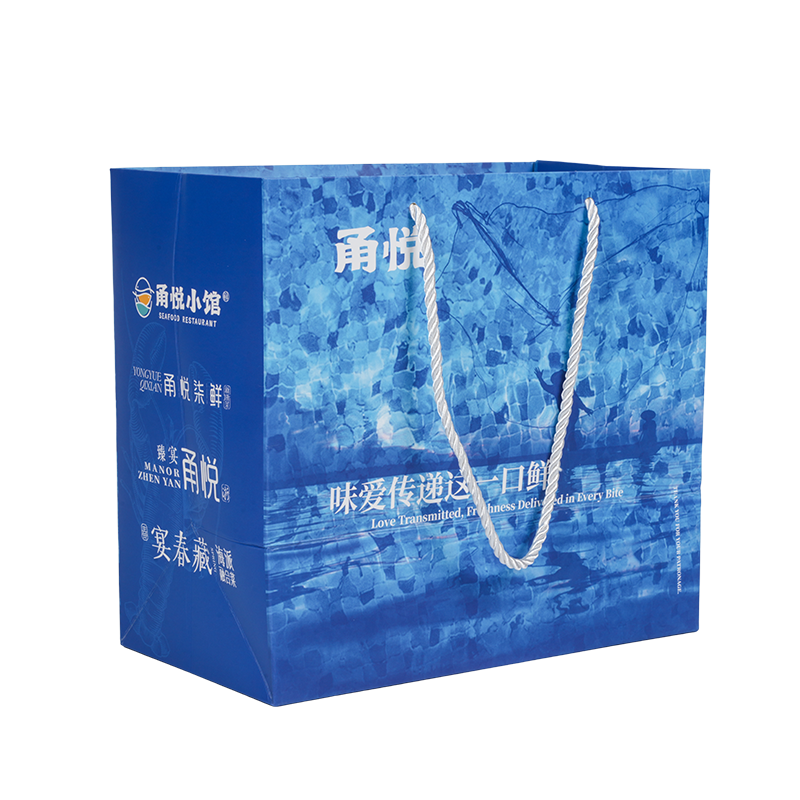
Key Material Specs: What Actually Matters
Not all kraft paper bags are built equal. For food delivery applications specifically, material performance under real-world conditions — heat, grease, humidity, and physical stress during transit — determines whether the bag arrives at the customer's door intact or collapsed. Purchasing on price alone without understanding the underlying specifications is one of the most common and costly mistakes food service buyers make.
The following table outlines the core material parameters and their practical implications for delivery use:
| Specification | Recommended Range | Why It Matters |
|---|---|---|
| Paper Grammage (GSM) | 100–150 GSM | Determines load-bearing capacity and resistance to tearing under wet or heavy conditions |
| Grease Resistance | PE coating or inner barrier layer | Prevents oil migration from fried foods; keeps exterior clean for riders and customers |
| Breathability | Controlled vapor permeability | Releases steam from hot food without drying it out; prevents sogginess in fried items |
| Food-Grade Compliance | PFAS-free, BPA-free, odorless | Mandatory for direct food contact; required by EU, FDA, and most national regulators |
| Tensile Strength | High tear resistance, reinforced bottom | Supports full meal sets including containers, drinks, and condiments without failure |
Buyers frequently compare GSM figures in isolation, but tensile strength, bottom burst resistance, and grease barrier performance collectively determine real-world durability. A bag rated at 120 GSM with a quality PE inner liner will consistently outperform a 150 GSM uncoated alternative when carrying saucy or oily menu items.
Design Features Built for Delivery Conditions
Material quality is the foundation, but structural design is what makes a kraft paper bag genuinely functional across the full delivery chain — from kitchen packaging to scooter transport to doorstep handoff.
Handle construction is often underestimated. Twisted paper handles offer the most ergonomic grip and the highest weight tolerance, making them the standard choice for full-meal delivery bags. Flat paper handles perform adequately for lighter loads such as bakery items or single-serve snacks. Die-cut handles are best suited for retail gifting rather than hot food delivery, where moisture from steam can weaken the cutout over time.
The bottom gusset and flat-base design determine whether a bag stands upright and whether containers inside shift during transit. A wide, reinforced flat bottom significantly reduces the risk of spills and makes loading faster in high-volume kitchen environments. For delivery riders, bags that stand stably in insulated carry boxes also reduce handling time at pickup.
An increasingly important feature for restaurant operators is the tamper-evident seal. Whether applied via a peel-and-seal strip or a dedicated adhesive sticker zone, this feature addresses a core consumer concern about delivery safety — and has become a standard expectation on major platforms. Bags designed with a clean, flat fold-top and a dedicated sticker area allow kitchen staff to seal orders quickly without additional tools or materials.
Custom Printing and Branding Opportunities
For delivery-focused food businesses, the kraft paper bag is often the only physical brand interaction the customer experiences. Unlike dine-in environments where décor, staff, and plating convey brand identity, delivery relies almost entirely on packaging to communicate who you are.
Custom printing on kraft paper is exceptionally versatile. The natural brown texture of unbleached kraft creates a warm, artisanal aesthetic that pairs well with minimalist single-color logo printing — a look strongly associated with premium, health-conscious, and sustainable food brands. White kraft paper provides a brighter canvas for full-color printing, photographic imagery, and vivid brand palettes.
Common print finishes for delivery bags include:
- Flexographic printing — the most cost-effective option for bulk runs, with sharp results at 1–3 colors
- Offset printing — higher color fidelity, suited for complex designs or photography-based artwork
- Water-based inks — the standard for food-contact safe printing; required by most food-grade certification bodies
Minimum order quantities for custom printed kraft bags typically start at 500–1,000 units for standard sizes, with pricing improving significantly at 5,000 units and above. Working directly with an OEM manufacturer rather than a reseller gives buyers greater control over artwork approval, print accuracy, and lead times.
Sustainability and Compliance
The sustainability credentials of kraft paper bags are well established, but the compliance landscape is evolving rapidly, and food businesses sourcing packaging at scale need to keep pace with both regional regulations and customer expectations.
From a material standpoint, kraft paper is produced from wood pulp through a chemical process that preserves long cellulose fibers, resulting in a stronger and more durable sheet than recycled paper alternatives. Unbleached kraft retains lignin, giving it the characteristic brown tone and adding structural rigidity. Both bleached and unbleached kraft are fully recyclable through standard paper waste streams and biodegradable under composting conditions.
The most significant regulatory development in recent years concerns per- and polyfluoroalkyl substances (PFAS). Many legacy grease-resistant paper coatings relied on PFAS chemistry, which has since been linked to environmental persistence and health concerns. Regulatory bodies in the EU, the U.S. (state-level), and multiple Asian markets are actively restricting or banning PFAS in food-contact materials. Sourcing bags that are explicitly certified PFAS-free is now a procurement baseline for responsible operators.
Additional compliance markers to verify with your supplier include FSC certification for responsible forestry sourcing, EN 13432 or ASTM D6400 for compostability claims, and ISO 22000 or equivalent food safety management system certification at the factory level. For a broader overview of our compliant food packaging products, including material certifications and testing documentation, visit our product range.
How to Choose the Right Supplier
The difference between a reliable kraft paper bag supplier and an unreliable one rarely becomes apparent during the sample stage — it shows up in the third or fourth production run, when quality control slips, lead times extend, or specifications quietly change. Evaluating suppliers on the right criteria before committing to a long-term relationship protects both product quality and operational continuity.
The key factors to assess when selecting a manufacturer for kraft paper bags for food delivery:
- Food-grade certifications — Verify that the factory holds current, auditable certifications for food-contact material production. Request documentation, not verbal assurances.
- OEM and customization capability — Confirm that the supplier can produce to your exact specifications: size, GSM, coating, handle type, and print artwork. Ask to see samples produced to custom spec, not standard catalog items.
- Quality consistency across runs — Ask for references from buyers who have placed repeat orders. GSM variation, color shift between print runs, and seam integrity are the most common quality drift issues at scale.
- Minimum order flexibility — For growing businesses, a supplier willing to accommodate lower initial MOQs with a clear path to volume pricing is preferable to one that only serves very large buyers.
- Lead time transparency — Standard production lead times for custom kraft bags range from 15 to 30 days for sea freight sourcing from China. Suppliers who over-promise on lead times create downstream supply chain risk.
- Sampling process — A credible manufacturer will provide pre-production samples for approval before committing the full run. This step is non-negotiable for custom print orders.
As a factory-direct OEM manufacturer with an established quality management system, we work with restaurant groups, food delivery platforms, and independent operators across multiple markets. Contact our team to request samples, discuss specifications, or receive a tailored quotation for your packaging requirements.
Product Categories
Mainly engaged in various types of packaging boxes made of different materials and various paper products.



-
Email
[email protected]Phone Number
+86-15300896380 -
Address
No. 58 Hongmudan Road, Songjiang District, Shanghai, China -
Quick Links
Home About Us Service Industries News Contact -
Products
Food Packaging Cosmetic Packaging Gift Wrapping Apparel Packaging Home Textile Packaging Other Packaging Paper Packaging Boxes -
feel free to contact us

