
 English
  日本語
日本語  Français
  Español
  عربى
عربى  italiano

Industry News
 Jun 25, 2026
 Posted by Administrator
Custom Paper Bags Manufacturer: How to Choose the Right Partner
Sourcing custom paper bags sounds straightforward — until you're three weeks from a product launch, holding a sample that looks nothing like what was quoted, from a supplier who has stopped responding. This guide is written for purchasing managers and brand owners who want to avoid that situation. It covers exactly what to specify, what to verify, and what to ask before placing an order with any custom paper bags manufacturer.
Content
- 1 Why the Manufacturer You Choose Determines More Than Price
- 2 Define Your Specification Before You Contact Anyone
- 3 The Four Bag Types and When to Use Each
- 4 How to Audit a Custom Paper Bags Manufacturer Before You Order
- 5 Printing and Finishing: What Drives Cost and Quality
- 6 MOQ, Lead Time, and Total Cost: What to Negotiate and What to Accept
- 7 Sustainability Requirements: What Buyers Need to Know Now
- 8 The Right Way to Request a Sample
- 9 Summary: What Separates a Reliable Manufacturer from a Risky One
Why the Manufacturer You Choose Determines More Than Price
Most buyers begin with a budget. That is the wrong starting point. The manufacturer you choose determines print accuracy, structural integrity, lead time, and your ability to reorder consistently. A factory that produces acceptable samples but cannot replicate them at volume — or cannot maintain color fidelity across batches — creates downstream costs that far exceed any unit-price savings.
The global paper bags market was valued at USD 6.38 billion in 2025 and is projected to grow at a CAGR of 5.25% through 2032, according to market analysis from Straits Research. That growth is driven largely by brands replacing plastic with custom-printed paper — which means supplier capacity is tightening. Choosing the wrong partner early costs you more than money; it costs time you will not get back.
Define Your Specification Before You Contact Anyone
Vague briefs produce vague quotes. Before reaching out to any manufacturer, lock down the following parameters. These are the inputs a factory needs to give you an accurate price — and they are the inputs that expose whether a supplier actually understands your application.
| Parameter | What to Specify | Why It Matters |
|---|---|---|
| Paper type and GSM | Kraft, coated art paper, recycled; 80–150 GSM typical range | Determines load capacity, printability, and cost |
| Bag style | SOS, euro tote, flat bottom, side gusset, boutique | Different styles require different tooling and machinery |
| Handle type | Twisted paper, flat paper, ribbon, cotton rope, PP rope | Affects durability, unit cost, and brand perception |
| Printing method | Offset, flexographic, digital, screen | Offset suits high-volume PMS-matched runs; digital suits short runs |
| Finish | Matte or gloss laminate, spot UV, hot foil stamping, embossing | Premium finishes require specific equipment — not all factories offer them |
| Target quantity (MOQ) | Your realistic first order and expected reorder volume | Drives whether offset or digital printing is more cost-effective |
| Required certifications | FSC, food-grade compliance, ISO 9001, SGS/BV | Non-negotiable for food retail, EU imports, or major retail buyers |
One note on GSM that buyers frequently overlook: the GSM rating on a quote sheet does not tell you about paper formation quality or tensile strength. Two bags can share the same GSM rating and perform completely differently under load. Ask for a burst strength test report, not just a GSM number.
The Four Bag Types and When to Use Each
Custom paper bags are not a single product category. The right structure depends on your product weight, retail environment, and brand positioning. Here is a practical breakdown.
SOS (Self-Opening Style) bags are the workhorse of food service. Their flat bottoms stand upright, making them ideal for takeout, bakery, and grocery applications. If you are sourcing for a restaurant group or food brand, start here. Our food-grade takeaway paper bag range covers grease-resistant and breathable kraft variants specifically engineered for hot food delivery.
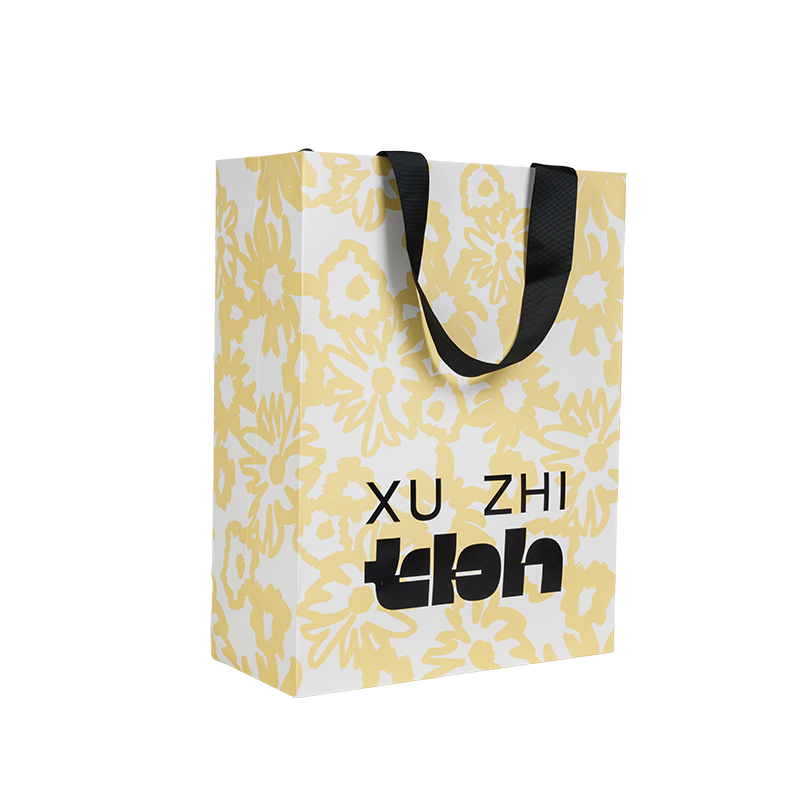
Euro tote bags are the standard for retail boutiques and fashion brands. They feature a wide gusset and sturdy handle — ribbon or cotton rope — and a flat base that holds shape on a shelf or display table. The print area is generous, and they accommodate matte lamination and hot foil stamping cleanly.
Flat bottom bags offer maximum shelf stability and are increasingly used in premium grocery, coffee, and specialty food retail. Their four-sided base means they stand without support, which reduces labor at checkout and creates a clean retail presentation.
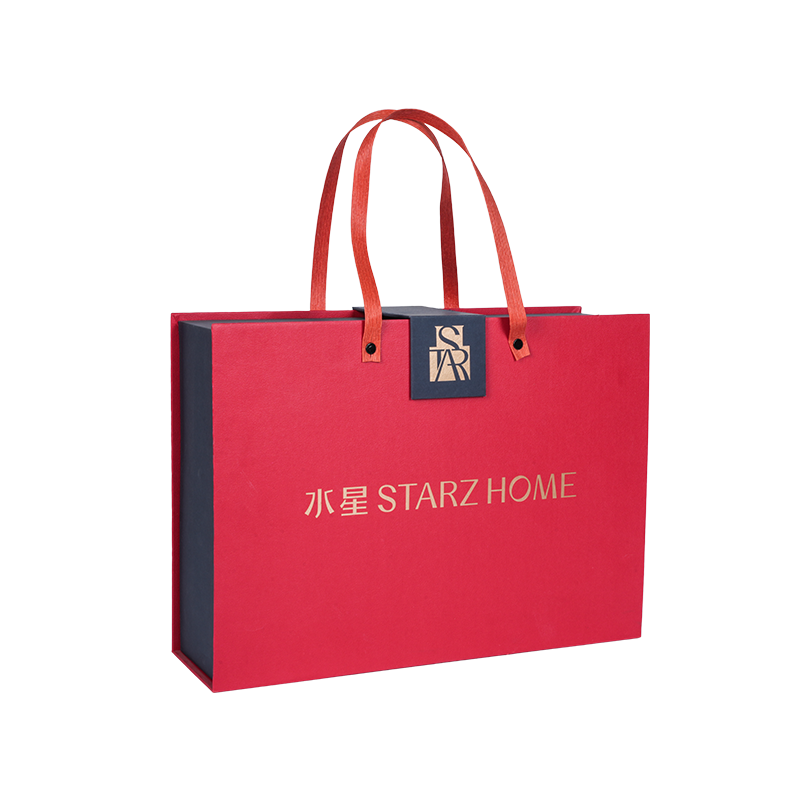
Boutique shopping bags (often called luxury paper bags) are built for premium unboxing experiences. Heavier board stock, reinforced bases, and refined handle options — satin ribbon, waxed cotton, or grosgrain — define the format. If your product sits at the premium end of retail, this is the category to specify. Our full food packaging range includes options across all weight classes and finish levels.
How to Audit a Custom Paper Bags Manufacturer Before You Order
Most buyers rely on supplier-provided photos and self-reported certifications. That is not due diligence. Here is a structured audit approach that professional packaging procurement teams use.
- Request the actual ISO 9001 certificate, not a logo on a website. Verify the certificate number against the issuing body's database. This takes three minutes and immediately separates legitimate manufacturers from those who list certifications they do not hold.
- Ask for a production capacity statement. A credible factory will tell you their monthly output by bag type, and their current lead time. If they cannot answer this specifically, they are either a trading company or running at overcapacity.
- Request batch consistency data. Ask for color deviation reports (Delta E values) from two separate production runs of the same SKU. Any factory doing serious print-quality management tracks this. A Delta E below 2.0 is considered acceptable for most retail applications.
- Clarify who does the printing. Many factories subcontract printing while handling assembly in-house. This is not inherently a problem, but you need to know — because the subcontractor introduces a variable you cannot audit directly.
- Ask about their defect handling process. What is their AQL (Acceptable Quality Limit) standard? Do they conduct pre-shipment inspection, or rely on in-process checks only? A factory with a clear AQL policy and documented inspection records is managing quality. One that offers verbal assurances is not.
Printing and Finishing: What Drives Cost and Quality
Print quality is where custom paper bags either deliver brand value or undermine it. Understanding the options prevents you from being oversold on methods that do not suit your application — or undersold on ones that would significantly improve your packaging.
Offset printing delivers the highest color accuracy for large runs. PMS (Pantone Matching System) colors are matched precisely, and the print surface is sharp enough for fine type and photographic gradients. It requires plate setup costs, which makes it economical above approximately 3,000 units per SKU.
Flexographic printing is the standard for kraft paper bags at high volume. It is fast and cost-effective but has slightly less color precision than offset. Suitable for two- to four-color designs on food service and grocery applications.
Digital printing eliminates plate costs entirely, making it the right choice for short runs, variable data, or SKU-level customization. The trade-off is a higher per-unit cost above roughly 1,000 pieces. For product launches, test markets, or seasonal packaging, digital is often the smarter financial decision.
On finishing: matte lamination protects the print surface and adds a premium tactile quality that resonates in retail environments. Spot UV selectively applies a high-gloss coating to logo or design elements, creating a contrast effect that elevates perceived value. Hot foil stamping in gold or silver is the standard finish for luxury retail and gift bags. Not every factory runs all three — confirm capability before requesting samples.
MOQ, Lead Time, and Total Cost: What to Negotiate and What to Accept
Minimum order quantities for custom paper bags from Chinese manufacturers typically start at 500–1,000 units for digital printing and 3,000–5,000 units for offset. These are not fixed — they reflect the economics of setup cost amortization. If a supplier quotes a suspiciously low MOQ on offset printing, ask how they are handling plate cost recovery. Either they are hiding it in the unit price, or the quote will change.
Standard production lead times run 15–25 days after artwork approval for straightforward designs, and 25–35 days for bags requiring specialty finishes such as foil stamping or embossing. Add 20–35 days for sea freight to the US or Europe. Back-calculate from your in-store date, not your order date, and build in a buffer for artwork revision rounds — these are consistently underestimated and are one of the most common reasons for delayed launches.
On total cost: unit price is one line item. Also factor in sample cost, courier fees for samples, inspection fees (typically USD 200–350 for a third-party pre-shipment check), and import duties. For EU buyers, FSC certification on the paper may be required by your retail partner — confirm before ordering, as switching to FSC-certified stock after production begins incurs full re-setup costs.
Sustainability Requirements: What Buyers Need to Know Now
Sustainability claims in packaging are increasingly subject to regulatory scrutiny. In the EU, the European Parliament's Packaging and Packaging Waste Regulation (PPWR) sets out binding requirements for recyclability and recycled content that apply to packaging placed on the EU market. Claiming a bag is "eco-friendly" without documented material sourcing is a liability, not a selling point.
When specifying a custom paper bags manufacturer for EU or UK retail supply, confirm the following:
- FSC or PEFC chain-of-custody certification covering the paper used in production
- Compliance with EN 13432 or equivalent standard if compostability is claimed
- Absence of PFAS-based coatings in any food-contact application
- Ink formulations that comply with EuPIA (European Printing Ink Association) guidelines
A manufacturer that cannot provide documentation on any of these points is not a viable supplier for regulated retail channels, regardless of price. Our full product range is manufactured to ISO 9001 standards with food-grade compliance available across applicable formats.
The Right Way to Request a Sample
Samples are not a formality — they are your only reliable quality signal before production. A few rules that professional buyers follow:
Always request a pre-production sample (PPS) using your actual artwork, not a generic design. Generic samples show you a factory's baseline capability. A PPS shows you whether they can execute your specific brief — color matching your brand palette, printing at the resolution your design requires, and handling any custom dimensions.
Test the sample under real conditions. Load it to its rated weight and carry it. Examine handle attachment points — this is the most common structural failure point in paper bags. Check seam adhesion at the base. Hold the print up in the lighting conditions of your retail environment. A bag that looks adequate in a photo can look inconsistent under fluorescent store lighting.
If the PPS requires changes, document them in writing before approving production. Verbal agreements about color or structure adjustments do not survive the time between sample approval and shipment.
Summary: What Separates a Reliable Manufacturer from a Risky One
The difference between a manufacturer that delivers and one that creates problems is rarely visible in a product catalog. It shows up in how they respond to detailed questions, how they manage quality documentation, and whether their production process has enough structure to replicate results at scale.
A reliable custom paper bags manufacturer will give you specific answers about capacity, batch consistency, and certification status. They will request a complete specification rather than asking you to choose from a template. And they will have a clear process for handling defects — not a policy of blaming the buyer for specification gaps.
If a supplier meets those criteria and their samples match the spec, you have found a workable partner. If they do not, no unit price is low enough to compensate for what goes wrong downstream.
Product Categories
Mainly engaged in various types of packaging boxes made of different materials and various paper products.


-
Email
[email protected]Phone Number
+86-15300896380 -
Address
No. 58 Hongmudan Road, Songjiang District, Shanghai, China -
Quick Links
Home About Us Service Industries News Contact -
Products
Food Packaging Cosmetic Packaging Gift Wrapping Apparel Packaging Home Textile Packaging Other Packaging Paper Packaging Boxes -
feel free to contact us

