
 English
  日本語
日本語  Français
  Español
  عربى
عربى  italiano

Industry News
 Jul 13, 2026
 Posted by Administrator
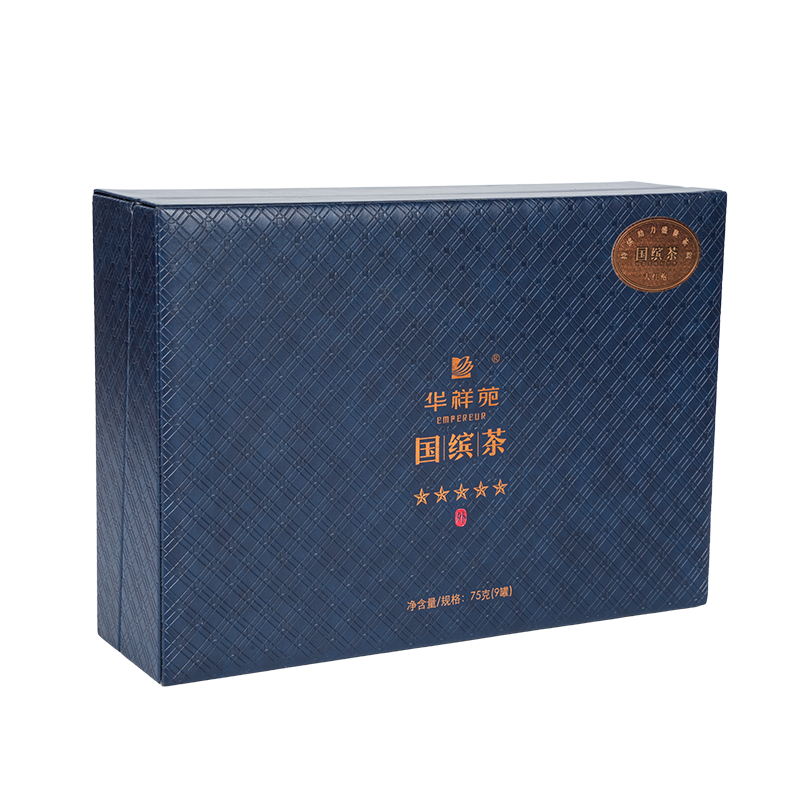
Rigid Book-Style Tea Gift Box: Craftsmanship & Custom Packaging
A premium rigid book-style tea gift box is not simply a container; it is a tactile narrative that communicates brand value before the tea is ever tasted. The most effective designs combine a 2.5mm to 3.5mm greyboard core wrapped in textured art paper or fabric, with magnetic closure flaps and precisely mitered hinges that open flat like a hardcover book. This construction achieves the structural integrity to protect delicate tea cakes or individually wrapped sachets while creating an unboxing experience that associates the tea with quality and ceremony. Sourcing from a manufacturer that controls the entire production chain—from die-cutting to box assembly—ensures that the grain direction of the covering paper aligns with the hinge, preventing the spine from cracking after repeated use.
Content
- 1 The Anatomy of a Rigid Book-Style Box
- 2 Production Equipment and Process Precision
- 3 Material Selection and Surface Treatments
- 4 Interior Trays and Product Securing Systems
- 5 One-Stop Service from Concept to Container
- 6 Customization Beyond the Standard Book Format
- 7 Sustainability in Rigid Box Production
- 8 Partnering with a Qualified Supplier
The Anatomy of a Rigid Book-Style Box
The book-style box mimics the mechanical structure of a case-bound hardcover book. Its core consists of three rigid panels: a front cover, a spine, and a back cover, all connected by a flexible hinging material. The interior holds a custom-milled tray or a die-cut foam insert that cradles the tea product in individual wells. Understanding the layering of these components reveals why quality control at the raw material stage dictates the final product's lifespan.
Core Material and Warp Prevention
The greyboard used for the covers must have a moisture content between 8% and 12% at the time of lamination. If the greyboard is too dry, it will absorb moisture from the adhesive and bow outward, creating a convex lid that refuses to sit flush. If too wet, it delaminates from the inside. Our facility at No. 58 Hongmudan Road, Songjiang District, Shanghai, maintains a climate-controlled clean workshop specifically to stabilize greyboard prior to production. This 13,000-square-meter workshop enables simultaneous handling of large-volume orders without environmental fluctuation that causes warp defects.
Hinge Engineering and Cycle Testing
The hinge connecting the front and back covers is typically constructed from a strip of 120gsm to 150gsm kraft paper or a durable bookbinding cloth. This hinge is glued across the spine gap and then covered by the surface wrap material. A well-built book-style tea box withstands over 2,000 open-and-close cycles without the hinge paper tearing or the surface material delaminating. Inferior construction shortcuts this by gluing the surface paper directly across the hinge without a reinforcing strip, a failure point that manifests within weeks of retail display handling.
Production Equipment and Process Precision
The difference between a mass-produced commodity box and a high-end rigid tea box lies in the tooling and machine calibration. Our production line integrates fully automatic equipment that reduces manual handling errors and increases dimensional repeatability to tolerances within ±0.5mm across a batch of 10,000 units.
| Equipment | Function | Quality Impact |
|---|---|---|
| Automatic Die-Cutting Machine | Cuts greyboard panels and trays to exact footprint | Ensures clean, burr-free edges for tight corner miters |
| Hot Stamping Press | Applies metallic foil to cover and spine | Consistent temperature and pressure prevent foil flaking |
| Automatic Film Laminator | Bonds BOPP or matte film to printed paper wrap | Scratch resistance and waterproof surface protection |
| Automatic Box-Making Machine | Folds and glues the rigid cover assembly | Uniform adhesive application eliminates glue ooze at corners |
Each piece of equipment operates under the ISO9001-certified quality management system. This means that process parameters such as hot stamping temperature, dwell time, and film lamination roller pressure are documented, monitored, and traceable to each production batch. For a tea brand ordering 5,000 book-style boxes with gold foil logo stamping, this traceability guarantees that box number 4,987 has the same foil adhesion strength as box number 1.
Material Selection and Surface Treatments
A rigid book-style tea gift box achieves its perceived value through the interaction of light, touch, and weight. Surface material choices range from coated art paper (157gsm to 200gsm) to woven fabric, PU leather, or even wood veneer over the greyboard core. The lamination film applied over printed paper determines the box's resistance to scuffing during transit and its tactile warmth.
Matte vs. Gloss Lamination and Soft-Touch Coatings
Matte lamination subdues glare and provides a velvety surface that suits minimalist tea branding, while gloss lamination intensifies color saturation for vibrant illustrative designs. An increasingly popular third option is soft-touch aqueous coating, which creates a suede-like feel that mimics the sensation of handling fine tea leaves. This coating must be tested for fingerprint resistance because a dark-colored box that shows oil marks after a single handling immediately loses its premium connotation.
Foil Stamping and Embossing Registration
Hot stamping applies a thin layer of metallic foil—gold, silver, rose gold, or holographic—onto the box surface using a heated brass or magnesium die. The die must strike the material with a pressure of approximately 50 to 80 tons per square inch to ensure the foil transfers cleanly without over-pressing into the greyboard. Embossing paired with foil creates a raised, metallic logo. Registration tolerance between the embossed relief and the foil edge should be held to 0.3mm or less; visible misalignment diminishes brand credibility instantly.
Interior Trays and Product Securing Systems
The interior of a book-style tea box must do more than hold the tea; it must present it. Trays are typically constructed from die-cut greyboard lined with velvet, satin, or color-matched paper. The tray is glued into the back cover recess. For loose-leaf tea pouches, a compartmentalized tray with finger-cutouts allows the customer to lift each packet without pinching the paper. For a pressed tea cake, a circular routed well sized 1mm larger than the cake diameter prevents movement during shipping while allowing easy removal. Magnetic closures embedded in the front cover and tray rim provide a satisfying snap upon closing. The magnet size—typically an 8mm to 12mm diameter neodymium disc—must be calibrated to the weight of the cover; too weak and the box drifts open, too strong and the user strains to open it.
One-Stop Service from Concept to Container
The complexity of a rigid book-style tea gift box extends beyond manufacturing to the upstream creative and downstream logistics stages. A fragmented supply chain where design, material procurement, production, and shipping are handled by separate entities introduces communication gaps that cause delays and quality drift. Our facility consolidates these stages into a single management workflow. The process begins with a design brief translated into a 3D structural rendering showing spine width, tray depth, and closure mechanism. After client approval, a physical sample is produced on the same automatic box-making line that will run the mass production order, ensuring the sample is production-representative, not a hand-crafted prototype that cannot be replicated at scale.
Sampling and Material Procurement
Material selection is critical at the sampling stage. The sample must use the exact specified greyboard thickness, the precise fabric or paper SKU, and the actual magnet grade intended for production. We maintain an in-house material library with supplier-certified chain-of-custody records. Once the sample is signed off, procurement of bulk materials commences immediately, with lead times tracked against the production schedule. This parallel processing avoids the bottleneck where production waits for a single missing specialty paper.
Logistics and Quality Control
Finished book-style boxes are packed in corrugated master cartons with internal dividers that prevent the face of one box from rubbing against the spine of another. Each master carton is labeled with the PO number, box SKU, and quantity. Our quality control team performs an AQL (Acceptable Quality Level) inspection based on the sampling plan agreed upon with the client, checking for spine alignment, magnet retention, surface defects, and tray bonding strength before the shipment is released. This inspection data is archived as part of the ISO9001 record set.
Customization Beyond the Standard Book Format
While the classic book-style box is a rectangular hardcover with a magnetic close, derivative formats adapt the same hinge-and-tray technology to unique brand identities. A double-door box uses two front covers that swing open from a central spine, revealing a diorama-like interior. A drawer-box hybrid integrates a pull-out drawer into the base of the book structure, combining two unboxing gestures. Custom special-shaped boxes can follow the silhouette of a tea leaf or a mountain contour, created by CNC-kiss-cutting the greyboard outline. Our production lines for acrylic printed products and anime peripheral items further extend the material vocabulary available for tea packaging, such as a clear acrylic window embedded in the book cover or an acrylic tray that showcases the tea through a frosted diffuser. The 180-employee workforce and the complete range of post-press equipment ensure that these unconventional designs are executed with the same repeatable precision as standard rectangular boxes.
Sustainability in Rigid Box Production
High-end packaging is often criticized for waste, yet a well-constructed rigid book-style box is inherently reusable and durable, contradicting the disposable paradigm. The greyboard core is typically manufactured from 100% recycled paper fiber. The adhesives used in our clean workshop are water-based and free of toluene or other volatile organic compounds. For brands requiring FSC certification, we can source paper stocks from certified mills and provide the chain-of-custody documentation that traces the fiber from forest to finished box. The magnetic closure and robust hinge design encourage the end user to repurpose the box for tea accessory storage, jewelry, or keepsakes, extending the packaging lifecycle far beyond the initial purchase. Designing for reuse is the most effective sustainability strategy a rigid box can adopt.
Partnering with a Qualified Supplier
Choosing a supplier for rigid book-style tea gift boxes requires verification of three fundamentals: production scale, quality system certification, and design-to-delivery integration. A facility operating 13,000 square meters of workshop space with 180 employees demonstrates the capacity to handle peak seasonal demand without subcontracting to unknown third-party workshops. ISO9001 certification ensures that quality is not dependent on a single experienced supervisor but is embedded in documented procedures. The ability to provide design, sampling, material procurement, production, and logistics as one service reduces the coordination burden on the tea brand and shortens the time from design approval to delivery. These factors collectively determine whether the boxes that arrive at your warehouse match the sample that won your approval.
Product Categories
Mainly engaged in various types of packaging boxes made of different materials and various paper products.


-
Email
[email protected]Phone Number
+86-15300896380 -
Address
No. 58 Hongmudan Road, Songjiang District, Shanghai, China -
Quick Links
Home About Us Service Industries News Contact -
Products
Food Packaging Cosmetic Packaging Gift Wrapping Apparel Packaging Home Textile Packaging Other Packaging Paper Packaging Boxes -
feel free to contact us

