
 English
  日本語
日本語  Français
  Español
  عربى
عربى  italiano

Industry News
 Sep 28, 2026
 Posted by Administrator
Craft Beer Packaging: Bottle Carriers, Labels, Rigid Gift Boxes, and Cold-Chain Board
A 15-barrel brewery moves its flagship from 22 oz bottles to 16 oz cans and assumes the packaging work ends when the artwork is approved. Three weeks later a distributor reports crushed corners on the anniversary gift sets, and the taproom manager is writing off six-packs with split handles. Nothing was wrong with the beer. The paper specifications had never been matched to the way the beer actually travels.
The short version: craft beer packaging is two separate engineering problems sharing one brand. Primary packaging, meaning cans, glass and kegs, protects the liquid and is governed by the fill line. Secondary packaging, meaning labels, carriers, shippers, rigid boxes and taproom bags, protects the brand, the logistics and increasingly the regulatory position of the brewery. Treating that second problem as a design exercise is what produces returns, rework and dead freight.
Three decisions determine whether paper packaging survives a brewery cold chain:
- Board grade with genuine wet-strength or barrier treatment, not just caliper.
- An adhesive rated for 0 degrees Celsius and continuous condensation.
- A glue seam and handle tested at 90 percent relative humidity, not in the design studio.
Content
Primary Versus Secondary Packaging: Where Paper Actually Earns Its Place
Seam dimensions, carbonation and dissolved oxygen belong to the canning or bottling line. Paper packaging starts immediately after that point, and it carries most of the visible brand work plus most of the logistics risk. Four paper formats do the heavy lifting in a typical brewery.
Labels and neck labels
Pressure-sensitive stock on 2.3 mil BOPP film survives an ice bucket without edge lift. Wet-strength paper labels look warmer but need a moisture-resistant varnish and a permanent acrylic adhesive that still grabs at 0 degrees Celsius.
Multi-pack carriers
Basket-style paperboard carriers are usually 16 to 18 point clay-coated newsback. Untreated board can lose roughly a third of its compression strength after 48 hours at 90 percent relative humidity, which is exactly what a walk-in cooler produces.
Rigid gift boxes
A two-piece rigid box built on 2 mm greyboard with a 157 gsm printed wrap carries the weight a barrel-aged release deserves. Corners crush and lids bow when the greyboard drops below 1.5 mm.
Shippers and e-commerce cartons
E-flute with a die-cut or molded insert is the practical answer for direct-to-consumer bottles: the insert absorbs the drop, the carton stays inside carrier girth limits.
Matching Format to Channel
Most rework in craft beer packaging traces back to one mistake: choosing a format because it photographs well, then discovering it cannot survive the channel it ships through. The comparison below maps the five formats that absorb most brewery paper spend against the specification that keeps them intact.
Bottle labels for a barrel-aged stout or a cork-and-cage release follow the same converting route as wine labels: foil stamping, embossing and a matte laminate are added after the base stock is chosen, so the substrate decision still comes first.
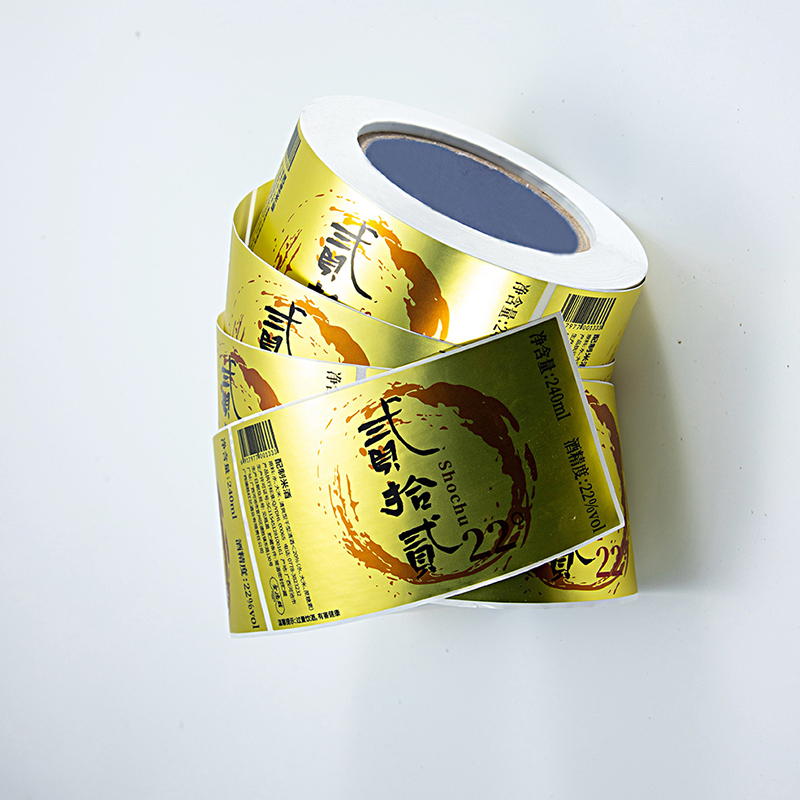 Matte foil embossed wine bottle labelThe bottle label is the visual core and information anchor of wine packaging—enabling instant communication, brand recognition, and cultural expression across retail, ...View Product →
The Hidden Cost Drivers Nobody Prices In
Print price per thousand is the number breweries compare, and it is rarely the number that decides the outcome. Four costs sit outside the quotation.
- Moisture loss: uncoated board in a 4 degrees Celsius cooler loses strength at a rate no vendor will quote against.
- Registration rework: a 0.2 mm drift on a four-colour label run is rejected stock, not a cosmetic issue.
- Freight cube: assembled carriers and rigid boxes ship at three to five times the volume of knock-down flats.
- MOQ steps: crossing from 5,000 to 20,000 units changes the die and plate amortisation per unit, sometimes by 40 percent.
Carrier and seam failure rate after 48 hours at 90 percent RH and 4 degrees Celsius
The gap between the first and last bar is the difference between a carrier that arrives intact and a carrier that is replaced twice a year. On a 10,000-unit run, the upgrade typically costs a fraction of one replacement cycle.
Where the Volume Actually Sits
A mid-size brewery's annual paper packaging spend is rarely spread evenly. Labels dominate because every bottle and can needs one, while rigid boxes and taproom bags look more prominent than they are on the balance sheet.
- Labels and neck labels: 30 percent
- Multi-pack carriers and trays: 26 percent
- Shipping and e-commerce cartons: 19 percent
- Rigid gift and limited-release boxes: 14 percent
- Taproom, festival and merch bags: 11 percent
The 11 percent at the bottom is where brand impression per dollar is highest. A die-cut handle kraft bag carried out of the taproom travels further than any poster, and it is the item most often ordered too thin: 150 gsm kraft handles 8 kg comfortably, while a 120 gsm bag starts to tear at the handle root once two growlers and a glass are inside. Buying one grade heavier costs very little per unit and removes a recurring complaint.
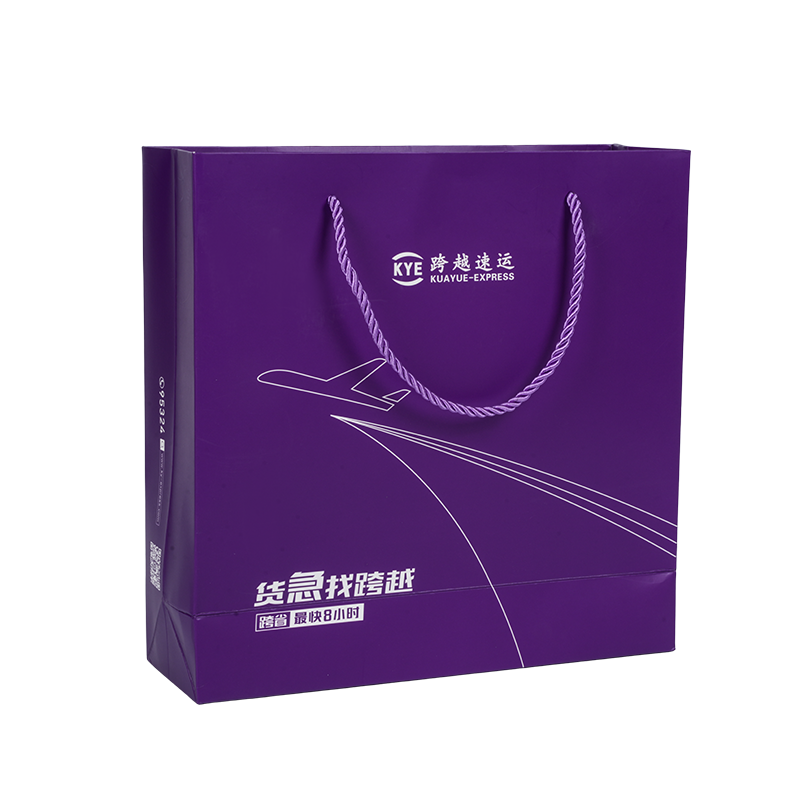 General packaging kraft paper bagThe core advantages of general-purpose paper bags are their wide adaptability, portability, practicality, and cost-effectiveness, while also being environmentally frie...View Product →
A Five-Step Sourcing Sequence
Packaging projects go wrong at the sample stage, not the production stage. Sequencing the work this way keeps tooling decisions behind the physical proof.
Step 1, week 1: scope the SKU list
Count annual volumes per pack format by channel, not per brand. Retail, taproom, gifting and direct-to-consumer have different tolerance profiles.
Step 2, weeks 1 to 2: fix substrate and structure
Match board grade, coating and adhesive to the coldest point in the route. Limited releases usually justify a rigid shell here rather than a folding carton.
Step 3, weeks 2 to 3: approve dieline and proof
Confirm dies to plus or minus 0.5 mm and print registration to plus or minus 0.2 mm. Sign off on a printed sheet, not a screen PDF.
Step 4, weeks 3 to 4: pilot and test
Run a drop test on the shipping carton and a 48-hour humidity test on any glued carrier before releasing mass production.
Step 5, weeks 4 to 6: produce and ship
Set in-line inspection points, lock the pallet pattern, and agree a reorder trigger based on lead time plus safety stock.
Send a filled-in dieline, a volume forecast per SKU and the coldest storage temperature to the packaging team, and ask for a structural sample before plates are cut.
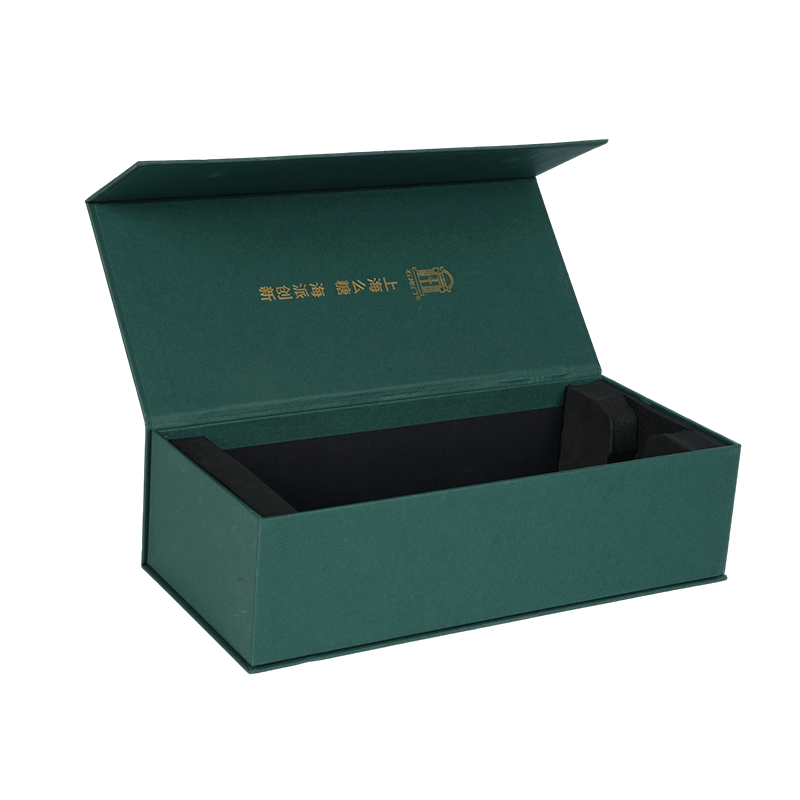 Matte Foil Embossed Single Bottle Book-Style Wine Box1. Box Type Positioning — The Standard Gift Box Solution for Premium Single Bottles Featuring a book-style opening mechanism, this design is tailored specifically for ...View Product →
Compliance, Storage and Reorder Discipline
Paper packaging for beverages now carries obligations that outlast the launch. These are the items worth writing into the specification document.
- Indirect food contact: paper and board near a bottle neck or can rim should meet FDA 21 CFR 176.170 and 176.180, or EU Regulation 1935/2004 for the European market.
- Mineral oil migration: specify low-migration inks and varnishes for any component that sits close to the closure, and keep recycled fibre out of that face.
- Extended producer responsibility: German VerpackG registration, French Triman labelling and US state programmes all price fees against weight and recyclability, so a lighter mono-material structure is often cheaper twice over.
- Deposit return schemes: labels and sleeves must not interfere with bottle sorting. Avoid full-body PVC sleeves on returnable glass.
- Storage: hold glued carriers flat at 15 to 25 degrees Celsius and below 60 percent relative humidity, and rotate stock first in, first out within twelve months.
Maintenance is unglamorous but cheap. Check glue seams on the first pallet of every run, replace worn dies when registration drifts, and audit pallet overhang each quarter, because a 20 mm overhang on a stacked pallet is where most corner damage begins.
Ask for a physical dieline proof early. A structural sample costs far less than a pallet of carriers that fail in the cold room, and it settles the arguments about board grade, coating and handle construction before anyone has paid for tooling. A paper packaging programme only needs to be right once, at the specification stage, and then it quietly keeps the brand intact from the brewhouse to the customer's front door.
Product Categories
Mainly engaged in various types of packaging boxes made of different materials and various paper products.




-
Email
[email protected]Phone Number
+86-15300896380 -
Address
No. 58 Hongmudan Road, Songjiang District, Shanghai, China -
Quick Links
Home About Us Service Industries News Contact -
Products
Food Packaging Cosmetic Packaging Gift Wrapping Apparel Packaging Home Textile Packaging Other Packaging Paper Packaging Boxes -
feel free to contact us

