
 English
  日本語
日本語  Français
  Español
  عربى
عربى  italiano

Industry News
 Aug 17, 2026
 Posted by Administrator
The Complete E-commerce Packaging Guide: Materials, Cost, Protection & Branding
Content
- 1 E-commerce Packaging: Define the Job Before You Choose the Box
- 2 The Four Objectives Every E-commerce Package Must Meet
- 3 Match the Format to the Product and the Parcel
- 4 Where the Packaging Budget Really Goes
- 5 Which Industries Buy the Most E-commerce Packaging
- 6 How to Specify E-commerce Packaging in Six Steps
- 7 Maintenance, Quality Control and Compliance
E-commerce Packaging: Define the Job Before You Choose the Box
A skincare brand we work with was shipping glass serum bottles in an oversized corrugated box filled with shredded paper. Damage claims ran above five percent, and the courier invoiced dimensional rather than actual weight on nearly every parcel. Both problems shared one cause: the packaging was chosen for how it looked in a product photo, not for what it had to survive in a parcel network.
E-commerce packaging works when you choose it in the right order — purpose, protection, shipping cost, and brand identity first; aesthetics last. A right-sized, structurally sound pack lowers freight bills, cuts damage returns, and still leaves room for branding that lifts perceived quality. That sequence is the difference between a packaging cost and a packaging investment.
- Choose structure before finish: a plain box that protects well beats a decorated one that fails in transit.
- Right-sizing pays twice — less void fill and lower dimensional weight on every shipment.
- Compliance is a launch gate: food-contact and export rules must be checked before materials are locked.
- Supplier process capability, not just price, decides whether packaging scales past the first order.
The Four Objectives Every E-commerce Package Must Meet
Every e-commerce packaging decision should answer four questions. Their priority changes by product category, but skipping one is where most cost and damage problems begin.
Protection: The Return-Rate Lever
The package must survive sorting machines, stacked pallets and last-mile handling. Fragile products — chocolates, glass cosmetics, cakes, wine bottles — need a structure and internal fit tuned to the real drop risk, not a generic amount of foam. A rigid double-door chocolate packaging box, for example, holds the product in place so pieces do not knock against each other during transit. Examining the failure modes of your specific shipment route matters more than adding extra cushioning; the damage patterns described in our guide to protecting fragile chocolates during shipping are a useful starting point.
 Rigid double-door chocolate packaging box Suppliers, Wholesale Company - ShanghaShanghai Jingmai Packaging Technology Co., Ltd is Rigid double-door chocolate packaging box Suppliers and Company in China, Wholesale Rig...View Product →
Shipping Efficiency: Dimensional Weight Is the Real Price
Carriers bill on the greater of physical or volumetric weight. An extra half inch of depth can push a parcel into a higher rate bracket, so every millimeter of board, insert and void fill has a freight consequence. Design the pack to the product envelope first, then reduce volume before negotiating material grade.
Branding and Unboxing: The First Physical Touchpoint
The parcel is the first moment the customer meets the brand in person. Structure, print and opening sequence set expectations before the product is even touched. A rigid lid-and-base perfume packaging box uses a firm lid fit, clean print surface and stable base to recreate a counter display experience in a living room — the main reason premium cosmetics brands rarely settle for a plain mailer.
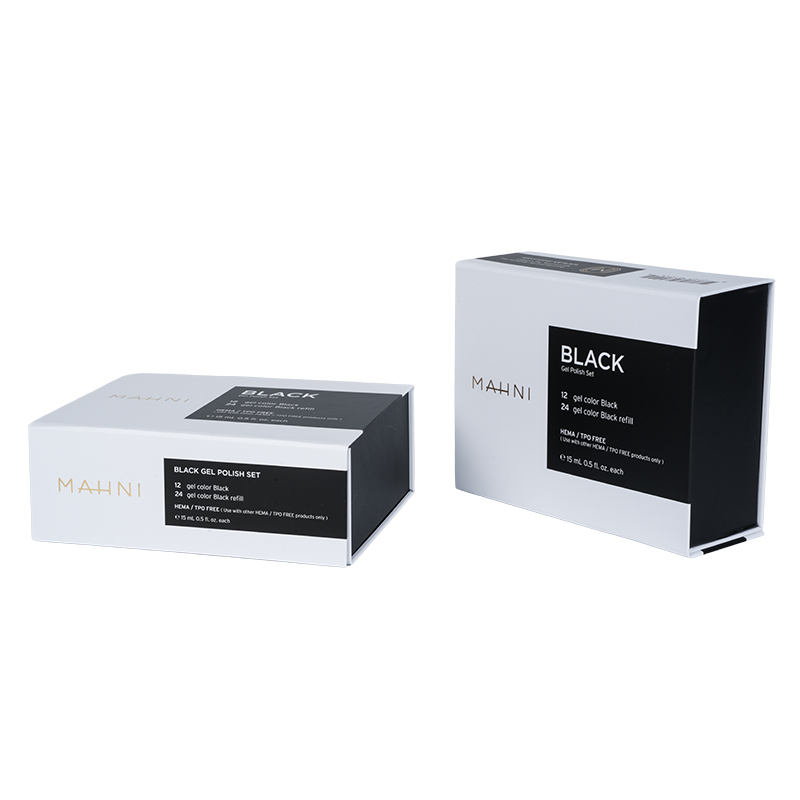 Rigid lid-and-base perfume packaging box Suppliers, Wholesale Company - ShanghaiShanghai Jingmai Packaging Technology Co., Ltd is Rigid lid-and-base perfume packaging box Suppliers and Company in China, Wholesale Rigi...View Product →
Sustainability and Compliance: The Gate Before Launch
Buyers and regulators are both scrutinizing packaging claims. Paperboard and kraft structures are easier to recycle than mixed plastics; packaging that touches food requires food-grade paper, inks and coatings; and export markets add labeling and restricted-substance rules. A structure that fails compliance cannot be rescued by decoration later.
Match the Format to the Product and the Parcel
Format determines protection, freight footprint and perceived value. Based on the order profiles we see across export customers, the comparison below covers the formats most common in e-commerce.
For food brands and quick-turnaround delivery, a semi-rigid kraft paper takeaway box offers the wall strength of a corrugated carton at a lower weight than a rigid box, and it erects cleanly on automated lines. We explain the structural details in our semi-rigid kraft takeaway box guide; where the product is greasy or moist, the same structure can be produced with a coated kraft inner surface. That combination of low weight and reliable erection is why cafés, bakeries and meal-delivery brands favor the format for everyday e-commerce orders.
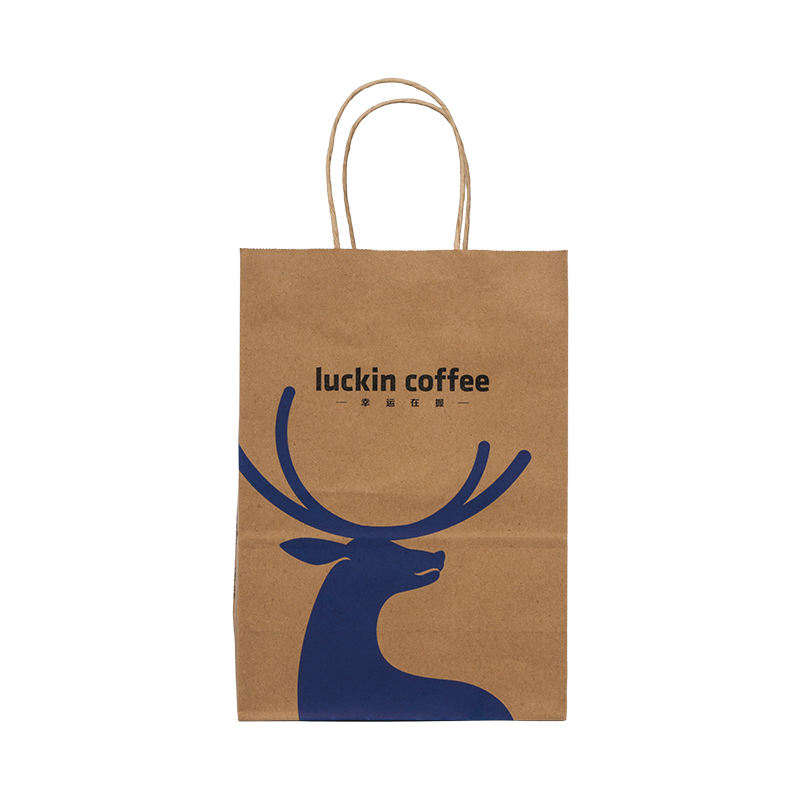 Semi-rigid kraft paper takeaway box Suppliers, Wholesale Company - Shanghai JingShanghai Jingmai Packaging Technology Co., Ltd is Semi-rigid kraft paper takeaway box Suppliers and Company in China, Wholesale Semi-rigi...View Product →
Where the Packaging Budget Really Goes
The box price is only the visible part. Across mid-range e-commerce orders, the full per-order packaging cost typically splits as shown below.
Void fill is the classic hidden cost. When a box is only sixty percent filled, the remaining forty percent is funded by shredded paper, air pillows or foam — and by the dimensional weight of that empty space. Right-sizing the box converts most of that expense into saved freight.
Packing labor is the second overlooked item. A structure that needs three pieces of tape, two inserts and a careful folding sequence adds seconds per order; across a thousand orders a day, those seconds become a full-time operator or an extra shift. Simple structures and prefolded inserts pay for themselves immediately.
Only after trimming these two items does it make sense to spend the remaining budget on premium print and coatings.
Which Industries Buy the Most E-commerce Packaging
Demand is not evenly spread. Based on the order mix handled in our 13,000-square-meter plant for export customers, food and beverage is the largest consumer of e-commerce packaging, with cosmetics close behind.
Food and beverage e-commerce needs barrier properties, food-contact compliance and formats that survive both ambient and cold-chain transit. Cosmetic and personal-care brands buy rigid structures and premium finishes because the unboxing moment drives repurchase and gifting behavior. Apparel brands favor light flexible mailers, paper bags and flat boxes to keep per-order freight low. Gift and seasonal packaging peaks around holidays, with decorative structures such as hexagonal and book-shaped boxes lifting perceived value. Home-textile brands use laminated flat boxes that protect fabric during transit while keeping warehouse storage efficient.
How to Specify E-commerce Packaging in Six Steps
The cheapest packaging is the one specified once and produced correctly the first time. This sequence prevents the most common failures: overpackaged pilots, materials that fail at scale, and artwork that delays production.
Define the SKU and logistics profile
Record product weight, fragility, dimensions and the courier's dimensional-weight rules for your main markets before discussing materials.
Select structure and material with the supplier
Share the full brief. A capable packaging manufacturer proposes substrates, board thickness and formats instead of quoting a generic box.
Prototype and simulate shipping
Fill the sample with real product, drop it, stack it and send it through a carrier. A real shipping test beats a bench-side estimate.
Approve artwork and print standards
Confirm color proofs, coating coverage, barcode readability and dimensional tolerances before the mass-production run starts.
Control the first production batch
Check dimensions, glue joints, print register and packing consistency at the beginning of the run, not after a full batch is finished.
Review returns and customer feedback
Track damage claims and unboxing comments by SKU, then feed the findings into the next design and material iteration.
When comparing quotes, include freight and labor in the total cost rather than only the unit price; a slightly more expensive box that erects faster and fills tightly usually wins on total cost. Supplier selection deserves its own process, because equipment, clean-room conditions and export experience determine whether packaging performs at volume. Our guide on choosing a custom paper bag manufacturer lists the capability questions worth asking, from sample turnaround to overseas shipping experience; the same criteria apply to boxes, trays and pouches.
Maintenance, Quality Control and Compliance
Treat Packaging as a Manufactured Product
E-commerce packaging should be quality-controlled like any production batch. Check incoming board thickness and print color — a color difference (ΔE) below 2 is a common production tolerance. Run drop tests on assembled packs, and inspect glue application, crease quality and crush resistance during the run so issues are caught before customers do.
Food Contact and Restricted Substances
For food e-commerce, packaging that touches the product must use food-grade paper, inks and coatings. Keep material certificates and test reports for every batch, and verify restricted-substance rules for each destination market. If the packaging carries a claim — recyclable, compostable, plastic-free — the evidence must match the claim on the label and in the product listing.
Housekeeping That Saves Money
Store the approved artwork version, archive supplier test reports and standardize inserts across SKUs. Review packaging cost per order quarterly: freight rates and material prices move faster than packaging designs, and a quarterly review catches savings that would otherwise stay buried in the invoice.
E-commerce packaging is a logistics component, a brand asset and a compliance document at the same time. Specify it for what it must do, test it in the real network and keep the documentation in order. Brands that follow this discipline ship more, return less, and build an unboxing experience that customers actually remember.
Product Categories
Mainly engaged in various types of packaging boxes made of different materials and various paper products.



-
Email
[email protected]Phone Number
+86-15300896380 -
Address
No. 58 Hongmudan Road, Songjiang District, Shanghai, China -
Quick Links
Home About Us Service Industries News Contact -
Products
Food Packaging Cosmetic Packaging Gift Wrapping Apparel Packaging Home Textile Packaging Other Packaging Paper Packaging Boxes -
feel free to contact us

